
How Often Should AC Be Serviced?
June 9, 2026If your AC starts blowing warm air in the middle of a hot week, the question changes fast from “Can this wait?” to “Why didn’t I service it sooner?” That is why homeowners, tenants, landlords, and business operators often ask how often should AC be serviced – because regular maintenance is usually the difference between quiet performance and an expensive breakdown.
For most systems, professional AC service once or twice a year is the right baseline. But the real answer depends on how heavily the unit runs, the age of the system, indoor air quality, and whether the property is residential or commercial. A light-use unit in a mild season may hold up well with annual service, while a hard-working system in a hotter climate often benefits from two visits each year.
How often should AC be serviced for most properties?
A good rule is to schedule professional service every 6 to 12 months. For many homes, once a year is enough to keep the system efficient and catch small issues before they grow. For properties where the AC runs for long hours, two services a year is the safer plan.
That second visit matters more than people think. Air conditioning systems do not usually fail all at once. They lose efficiency gradually. Coils collect dirt, filters clog, drainage slows down, refrigerant problems start small, and electrical parts wear over time. Maintenance gives a technician a chance to spot those issues while the repair is still straightforward.
If you manage multiple units, rental properties, or small commercial spaces, a set maintenance schedule is even more valuable. It reduces surprise callouts, helps protect equipment life, and makes it easier to budget for repairs.
Why frequency depends on how your AC is used
There is no single schedule that fits every system. Usage changes everything.
If your AC runs almost every day for long stretches, it needs more attention than a unit used occasionally. Heavy runtime puts more stress on motors, capacitors, thermostats, filters, and coils. In hot climates, where cooling is not a luxury but a daily requirement, skipping service can mean reduced airflow, higher energy bills, and wear that builds faster than expected.
System age also matters. A newer AC in good condition may stay stable on a simple preventive schedule. An older unit often needs more frequent checks because parts are closer to the end of their service life. That does not always mean replacement is necessary. It just means regular inspection becomes more important.
Indoor conditions play a role too. Homes with pets, ongoing construction, dust, or poor ventilation tend to put more strain on air filters and evaporator coils. If the AC has to work harder to move air through a dirty system, efficiency drops and comfort suffers.
A practical service schedule to follow
For most households, booking professional maintenance before the hottest part of the year is a smart move. That gives the system a full inspection before it is asked to work at maximum capacity.
If the unit runs heavily for much of the year, schedule service twice annually. One visit can focus on cooling performance, refrigerant levels, electrical components, and airflow. The second can address cleaning, drainage, wear, and any decline in efficiency that has developed after months of use.
Commercial spaces often need a more frequent schedule than homes. Offices, shops, and service businesses usually have longer operating hours, more frequent door openings, and a stronger need for reliable indoor comfort. In those cases, maintenance every 3 to 6 months may make more sense.
Window units and split systems also differ slightly in maintenance demands. Split systems usually benefit more from full professional servicing because they involve indoor and outdoor components, drainage lines, electrical checks, and refrigerant performance. Portable and window units may be simpler, but they still need cleaning and inspection if they are used often.
Signs your AC needs service sooner
Even if you already have a yearly plan, some warning signs mean the system should be checked right away.
Weak airflow is one of the most common clues. If air is coming out but rooms are still not cooling properly, the problem may be a clogged filter, dirty coil, fan issue, or blocked ductwork. Strange noises also deserve attention. Buzzing, rattling, grinding, or clicking can point to loose components or electrical trouble.
Bad odors are another sign not to ignore. Musty smells may mean moisture buildup or mold in the system. Burning smells can indicate wiring or motor issues. Neither is something to leave until your next routine appointment.
Water leaks, thermostat inconsistency, short cycling, or a sudden jump in energy bills also suggest the system is under strain. In many cases, early service prevents a larger repair later.
What happens during professional AC servicing?
People often hear “AC service” and assume it means a quick filter check. Proper maintenance is more thorough than that.
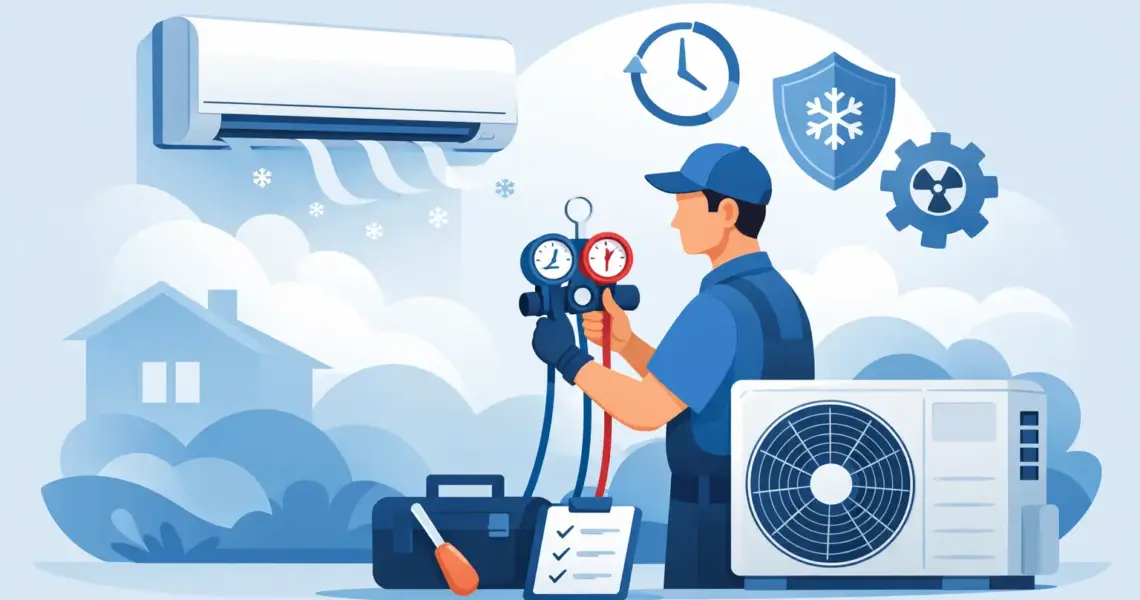
A technician typically inspects and cleans key components, checks airflow, tests electrical connections, examines the thermostat, clears the drain line, reviews refrigerant performance, and looks for worn or damaged parts. The goal is not just to fix visible problems. It is to catch hidden ones before they affect cooling, safety, or system life.
This is especially helpful for busy property owners who do not want to wait for a breakdown to force action. Preventive service gives you a clearer picture of how the unit is performing and whether any part is beginning to fail.
For landlords and property managers, it also helps maintain a more reliable environment for tenants. Fewer surprise outages usually mean fewer urgent complaints and less disruption.
What you can do between service visits
Professional maintenance is essential, but a few simple habits between appointments can help keep the system in better shape.
The first is filter care. Air filters should be checked regularly and replaced as needed. A dirty filter restricts airflow, makes the AC work harder, and can reduce indoor comfort quickly. In homes with pets or heavy use, filters may need replacement more often.
It also helps to keep the area around the outdoor unit clear. Debris, dust, and blocked airflow can reduce performance. Indoors, make sure vents are not covered by furniture or curtains. These small issues seem minor, but together they can affect how evenly the system cools.
What homeowners should avoid is attempting technical repairs without training. Refrigerant, electrical components, and internal parts should be handled by qualified technicians. Routine care is useful, but full servicing should stay professional.
The cost of waiting too long
Many people put off AC maintenance because the unit still “seems fine.” That is often how preventable repairs turn into urgent ones.
An unserviced system usually consumes more power as it loses efficiency. That means higher monthly bills without better comfort. Over time, dirt buildup and component strain can shorten the life of the unit, leading to earlier replacement than expected.
There is also the issue of timing. AC problems rarely happen at a convenient moment. They tend to appear when the system is under peak demand. That is why preventive service is not just about maintenance. It is about avoiding disruption.
For homes, that means comfort and peace of mind. For businesses, it can affect staff productivity, customer experience, and day-to-day operations.
How often should AC be serviced in Dubai-like heat?
In hotter regions where AC systems carry the workload for much of the year, twice-yearly servicing is often the smarter standard. Long cooling seasons create more wear, and dust exposure can make filters and coils dirty faster. In those conditions, annual service may be the minimum, not the ideal.
That is why many property owners prefer a dependable maintenance partner rather than waiting until cooling performance drops. For example, Dubai Home Master supports residential and commercial clients who want routine service, quick response, and the convenience of handling broader property maintenance through one trusted team.
If your AC runs hard, your best schedule is usually the one that prevents emergencies rather than reacts to them.
A simple way to think about it is this: service your AC before it gives you a reason to regret waiting. Once or twice a year is a small commitment compared with the cost of lost comfort, rising bills, and sudden repairs.