
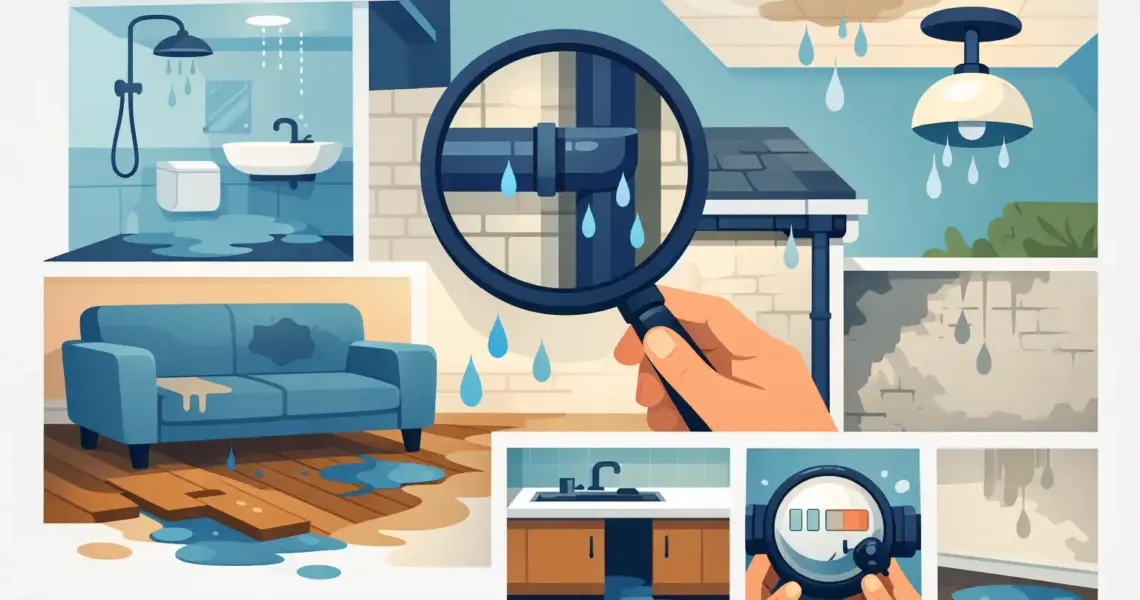
9 Signs of Hidden Water Leak at Home
June 10, 2026A water leak rarely announces itself with a burst pipe and a flooded hallway. More often, it starts quietly behind a wall, under a floor, or above a ceiling, leaving small clues that are easy to ignore until the repair becomes larger, messier, and more expensive. Knowing the signs of hidden water leak problems early can help you protect your home, avoid structural damage, and prevent mold from taking hold.
In many homes and commercial spaces, hidden leaks build up over time. A loose pipe fitting, a cracked supply line, worn sealant, or pressure issues can all cause slow water escape in places you do not see every day. The challenge is not just finding the leak. It is recognizing that something is wrong before the damage spreads.
Why hidden leaks cause bigger problems than people expect
A visible leak usually gets attention right away. A hidden one does not. Water can soak drywall, weaken wood, stain ceilings, damage paint, loosen tiles, and create damp conditions that affect indoor air quality. If the leak is near electrical wiring, it can also become a safety issue.
There is also the cost factor. What begins as a minor plumbing issue can lead to repainting, ceiling repair, cabinet replacement, flooring work, and mold treatment. For landlords and property managers, a small unnoticed leak can quickly turn into tenant complaints, vacancy concerns, or repeated maintenance callouts. For homeowners, it often means paying for damage that could have been limited with earlier action.
9 signs of hidden water leak you should not ignore
1. Your water bill rises for no clear reason
One of the earliest and most practical warning signs is a higher-than-normal water bill. If your usage habits have not changed but your monthly charge has increased, there is a good chance water is escaping somewhere.
This does not always mean a major pipe break. Even a slow leak behind a wall or beneath a sink can waste a surprising amount of water over time. Compare recent bills and look for a steady upward pattern rather than a one-time spike.
2. You notice a musty smell that does not go away
A persistent damp or musty odor often means moisture is trapped where air does not circulate well. Bathrooms, kitchens, laundry areas, storage rooms, and AC-adjacent walls are common problem spots.
If cleaning does not solve the smell, or if the odor returns quickly, moisture may be building up behind surfaces. This is often one of the clearest signs of hidden water leak issues, especially in apartments or villas where plumbing lines run through enclosed walls.
3. Paint or wallpaper starts bubbling, peeling, or cracking
Finishes do not usually fail without a reason. If paint begins to blister, bubble, or peel, or wallpaper starts lifting away from the wall, moisture may be pushing from underneath.
This is easy to mistake for normal wear, poor surface prep, or humidity. Sometimes it is. But if the damage appears in one isolated area or keeps returning after touch-ups, a leak should be ruled out first.
4. Water stains appear on ceilings or walls
Brown, yellow, or uneven damp patches are classic indicators of a leak. Ceiling stains are especially concerning because the source may be from an upper-floor bathroom, a concealed pipe, or the roofline rather than the exact spot where the mark shows up.
Stains can stay small for a while, then suddenly spread after heavier water use or a change in pressure. A fresh coat of paint may hide the mark temporarily, but it will not solve the underlying issue.
5. Flooring starts warping, lifting, or feeling soft
Water under flooring often reveals itself through subtle movement first. Wood may cup or swell. Laminate may lift at the edges. Tile grout may crack. Vinyl may loosen. In some cases, the floor feels slightly spongy when you walk across it.
This kind of damage can come from appliance leaks or plumbing lines beneath the floor. It depends on the room and the building layout, but any unusual flooring change without a visible spill is worth checking.
6. Mold or mildew keeps coming back
Mold needs moisture to grow. If you clean mold or mildew and it repeatedly returns, the real problem may be hidden water, not just surface humidity.
This is especially true when mold appears on walls, around skirting, inside cabinets, or near areas that should stay relatively dry. Small black or green spots may seem cosmetic at first, but repeated growth usually points to ongoing moisture.
7. You hear water when no fixtures are running
Sometimes your ears catch what your eyes cannot. If you hear dripping, trickling, or a faint hissing sound inside a wall when taps, toilets, and appliances are off, there may be a leak in the supply line.
This sign is easier to notice at night when the home is quiet. It can be intermittent, which makes it tempting to dismiss. Still, unexplained water sounds deserve attention, especially if they happen in the same area more than once.
8. Water pressure drops in part of the property
A sudden drop in water pressure can have several causes, and not all of them point to a leak. It could be a valve issue, sediment buildup, or a broader supply problem. But when reduced pressure affects only one zone or is paired with other symptoms like dampness or stains, a hidden leak becomes more likely.
Partial pressure loss is often more telling than a whole-property drop. It suggests something localized may be happening behind a wall or under a fixture run.
9. Damp spots appear where they should not
If a wall feels cold and damp, a cabinet base is wet, or a section of floor near no obvious water source stays moist, do not assume it will dry out on its own. Unexplained dampness is one of the most direct warning signs you can get.
The same goes for exterior walls with interior moisture marks. In some cases, the cause is plumbing. In others, it may involve waterproofing or AC drainage. The key point is that moisture without an obvious cause should be investigated quickly.
What to do if you notice signs of hidden water leak issues
Start with the basics. Check visible plumbing under sinks, behind toilets, around water heaters, and near washing machines or dishwashers. Look for pooled water, rust, mineral buildup, or damp cabinet interiors. If you can safely access your water meter, turn off all fixtures and see whether the meter continues moving. That can indicate ongoing water flow somewhere in the system.
What you should not do is wait too long because the signs seem minor. Hidden leaks are deceptive. A small stain or a faint odor can represent a much larger problem behind the surface. If you are seeing more than one warning sign, or if the same issue keeps returning after cosmetic fixes, professional leak detection is the smarter next step.
For busy property owners, speed matters. A qualified maintenance team can inspect the problem area, identify whether the source is plumbing, drainage, waterproofing, or related building issues, and handle the repair before it spreads into multiple trades. That is often the fastest and most cost-effective route, especially when the leak has already started affecting paint, ceilings, cabinetry, or flooring.
When a hidden leak becomes urgent
Some situations need same-day attention. If you see active ceiling sagging, water near electrical outlets, sudden major staining, pooling water, or a sharp spike in your water bill combined with sound or odor, treat it as urgent. The same applies if a tenant reports dampness that is worsening quickly or a business space is at risk of operational disruption.
In Dubai, where AC systems, sealed interiors, and frequent property turnover can make moisture issues harder to spot early, fast inspection is especially valuable. A responsive maintenance provider such as Dubai Home Master can help homeowners, landlords, and businesses address leaks before they turn into wider repair work.
Prevention is cheaper than repair
Not every hidden leak can be prevented, but many can be caught earlier with routine checks. Pay attention to utility bills, inspect under-sink areas monthly, look up at ceilings after plumbing use upstairs, and do not ignore recurring smells or stains. If your property has older pipework or has had previous water issues, periodic professional inspection can save a lot of disruption later.
A well-maintained property is not just about appearance. It is about catching small faults before they affect comfort, safety, and repair costs. If something feels off, it usually is. Acting early is what keeps a hidden water leak from becoming a visible problem everywhere else.