
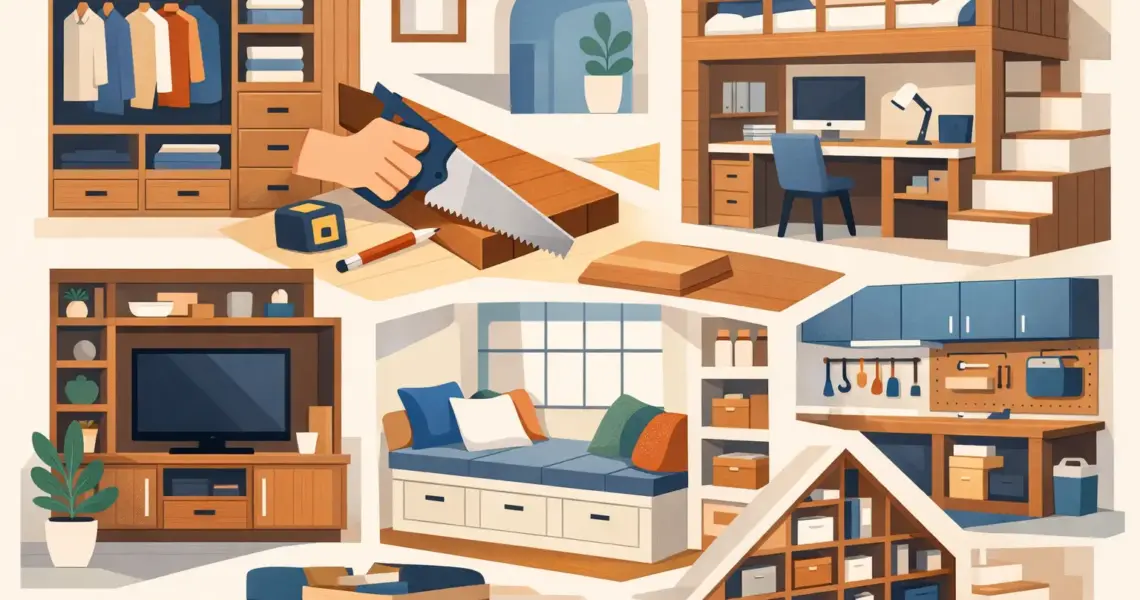
10 Custom Storage Carpentry Ideas That Work
June 13, 2026Clutter usually builds up in the same places – the entryway, under the stairs, around the TV unit, inside overstuffed wardrobes, and in corners that never seem useful. That is where custom storage carpentry ideas make a real difference. Instead of forcing your home or workspace to fit standard furniture sizes, custom woodwork lets storage follow the actual shape of the room, your daily habits, and the items you need to keep organized.
For busy homeowners, tenants, landlords, and property managers, this is less about decoration and more about function. Better storage saves time, protects finishes, reduces visual mess, and helps a property feel larger without changing its footprint. When done properly, it also adds a clean built-in look that freestanding cabinets rarely match.
Why custom storage works better than off-the-shelf units
Store-bought shelving and cabinets can work in simple rooms with standard dimensions. The problem starts when walls are uneven, ceilings are high, corners are tight, or there are pipes, AC lines, columns, or odd recesses to work around. In those situations, standard pieces often waste valuable space or create awkward gaps that collect dust and clutter.
Custom carpentry uses every inch more efficiently. A fitted unit can reach full height, wrap around obstacles, and include the exact mix of drawers, open shelves, hanging space, and concealed compartments you actually need. That matters even more in apartments, villas, offices, and rental properties where storage pressure builds quickly.
There is also a durability advantage. Good custom carpentry is built for the load it will carry and the way it will be used. A shoe cabinet near the entrance, for example, needs a different depth and ventilation approach than a linen closet or a media wall. That kind of planning helps storage stay useful long after the initial installation.
Custom storage carpentry ideas for the rooms that need it most
Floor-to-ceiling wardrobes
A standard wardrobe often leaves dead space above and around it. A fitted wardrobe solves that immediately by using the full wall height. The lower section can handle daily clothing, the center can be designed for drawers and shelves, and the upper section can hold seasonal storage, luggage, or bedding.
This works especially well in bedrooms with limited floor space because sliding doors keep movement areas clear. If swing doors are preferred, the room needs enough clearance. That is one of those details where the right choice depends on the size of the room and how the space is used every day.
Under-stair storage that looks intentional
The area below a staircase is often wasted or turned into a messy catch-all. Custom carpentry can turn it into pull-out drawers, a concealed utility cabinet, open display shelving, or a compact combination of all three.
For family homes, under-stair shoe and bag storage is especially practical. In commercial settings or small offices, it can become document storage or a hidden pantry area. The benefit is not only extra capacity but also a cleaner visual line through the property.
Built-in entryway benches and shoe cabinets
The entrance sets the tone for the whole property. If shoes, delivery boxes, and keys pile up there, the home feels disorganized before anyone steps inside. A built-in bench with storage below creates a simple drop zone that keeps daily items under control.
The best versions include seating, drawers for accessories, closed shoe compartments, and upper hooks or cabinets. In tighter spaces, a slim cabinet with tilt-out shoe storage may be more practical than a deep bench. The goal is to reduce clutter without making the walkway feel cramped.
Media walls with hidden storage
A TV wall can do more than hold a screen. With custom carpentry, it can hide cables, routers, gaming equipment, sound systems, and the small items that usually end up scattered across side tables.
This is one of the most useful custom storage carpentry ideas for living rooms because it combines aesthetics and organization in one feature. Open niches can display a few decorative pieces, while lower cabinets keep everyday clutter out of sight. If the room is compact, keeping the design visually light matters. Too many bulky cabinets can make the wall feel heavy.
Window seat storage
A window seat adds character, but it is also excellent hidden storage. In bedrooms, it can hold blankets and extra linens. In living areas, it can store toys, books, or occasional-use items. In an office, it can double as extra seating.
This option works best where there is enough depth to sit comfortably and enough natural light to make the area feel inviting. If the window is exposed to strong sun, material selection matters because excessive heat can affect finishes over time.
Custom kitchen pantry units
Many kitchens have plenty of cabinet frontage but poor internal organization. A custom pantry unit fixes that by tailoring shelf heights, pull-out trays, spice storage, and appliance sections to the household’s actual cooking habits.
Tall pantry cabinets are especially useful in narrow kitchens because they create vertical storage without spreading into circulation space. If multiple users share the kitchen, clearly divided sections can make day-to-day use much easier. This is a practical upgrade that improves convenience almost immediately.
Laundry and utility room cabinetry
Laundry areas often become clutter zones for cleaning supplies, tools, buckets, and extra household items. Custom cabinets can enclose these essentials neatly while still leaving access to machines, plumbing points, and service panels.
The smart approach here is balancing concealment with maintenance access. Storage should never make repairs harder later. A well-designed utility setup keeps the room tidy but still practical for servicing and routine cleaning.
Home office wall units
A small office can feel chaotic fast if papers, chargers, printers, and supplies have no fixed place. A custom wall unit with a desk, overhead storage, and lower filing cabinets can turn an unused wall into a proper workstation.
This is particularly helpful in multi-use rooms where the office shares space with a guest room or living area. Closed cabinetry keeps the setup looking neat after work hours. For people who mainly work digitally, fewer drawers and more concealed cable management may be the better choice.
Bathroom vanity and niche storage
Bathrooms rarely have enough storage, especially in apartments and guest washrooms. A custom vanity can be built around plumbing while maximizing drawer space for toiletries, towels, and cleaning products.
Recessed niche storage is another smart option if the wall depth allows it. That said, bathroom carpentry needs moisture-resistant materials and proper finishing. This is not the place to cut corners, because swelling and peeling can become a problem quickly in humid conditions.
Loft and overhead storage
Not everything needs to stay within easy reach. Seasonal decor, travel gear, archived documents, and occasional-use household items are good candidates for overhead cabinets or loft storage.
This works best in corridors, utility areas, and rooms with enough ceiling height to carry added cabinetry without making the space feel low. The design should stay clean and proportional. Extra storage is helpful, but not if it makes the room look crowded or blocks ventilation paths.
What makes a storage design successful
The best storage is not always the one with the most shelves. It is the one that matches how people use the room. A family with children needs easy-access compartments and durable finishes. A landlord furnishing a rental may prioritize simple, neutral, low-maintenance designs. A small business may need lockable cabinets and cable-ready workstations.
Good carpentry also considers door swing, drawer clearance, ventilation, cleaning access, and lighting. These details are easy to miss during planning, but they shape whether the finished unit feels effortless or frustrating. A beautiful cabinet that blocks movement or creates dead corners is still a poor solution.
Material choice matters too. Some areas need stronger moisture resistance. Others need impact-resistant finishes or a more polished decorative look. Budget plays a role, but smart planning usually matters more than chasing the most expensive material. A well-designed unit in the right finish often outperforms a costly design that ignores daily use.
When custom carpentry is worth the investment
Custom storage is usually worth it when space is limited, room dimensions are awkward, or clutter is affecting daily comfort. It also makes sense when you want one solution that improves both appearance and function instead of buying separate pieces over time.
For property owners, there is another advantage. Built-in storage can make a room feel more finished and more useful, which supports better presentation for tenants, buyers, or clients. In practical terms, it helps a property work harder without major renovation.
At Dubai Home Master, this kind of carpentry is most effective when it is planned as part of the wider condition of the space. Sometimes a storage upgrade also needs painting touch-ups, electrical adjustments, lighting updates, or minor wall finishing to achieve a clean final result. Handling that through one dependable maintenance partner saves time and avoids coordination problems.
The right storage should make your day easier the moment you start using it. If a corner, wall, or awkward recess has been wasting space for months, it may already be telling you what needs to be built.