
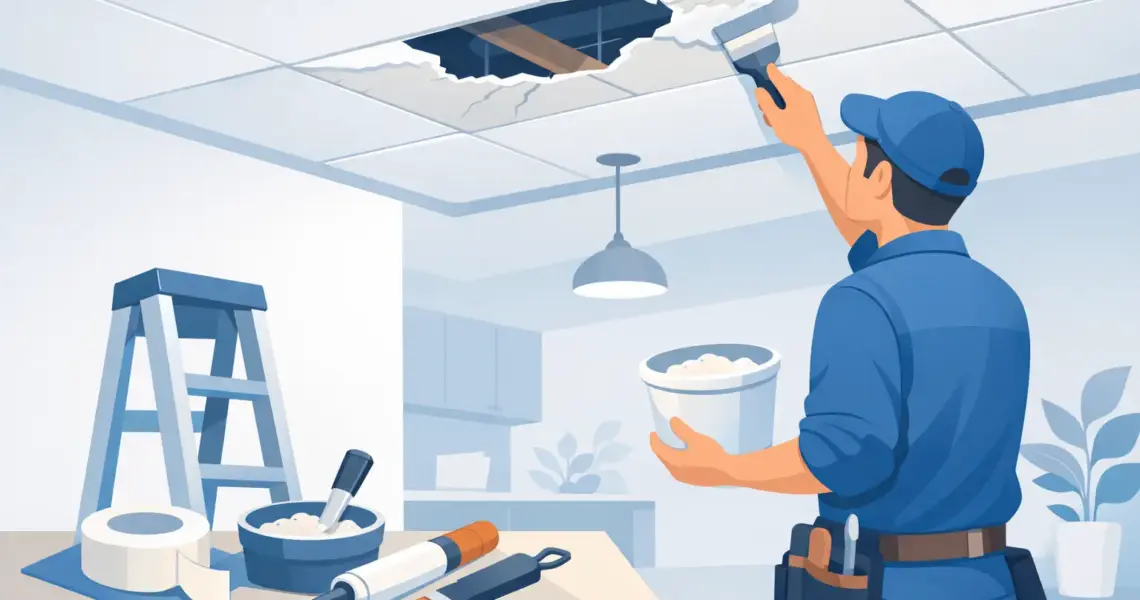
False Ceiling Repair Solutions That Last
June 16, 2026A stained ceiling panel, a sagging corner, or a crack running across the surface usually starts as a cosmetic issue. It rarely stays that way for long. When property owners look for false ceiling repair solutions, they are often trying to solve two problems at once – restore the look of the room and stop a bigger structural or moisture-related issue from spreading.
In Dubai homes, offices, and retail spaces, false ceilings do more than improve appearance. They hide ductwork, electrical lines, and piping, while also helping with lighting layout and overall finish quality. That means even minor damage deserves attention. A patch that looks simple from below may point to AC condensation, a plumbing leak, poor fastening, movement in the ceiling frame, or material fatigue.
Why false ceilings fail in the first place
A false ceiling can fail for several reasons, and the right repair depends on the actual cause. Water damage is one of the most common. A slow pipe leak, AC drain issue, or roof seepage can soak gypsum boards and weaken joints, causing discoloration, bubbling, or sagging.
Poor installation is another frequent factor. If the metal framework was not leveled correctly, hangers were spaced badly, or boards were fixed without proper support, the ceiling may crack or shift earlier than expected. This tends to show up around joints, light cutouts, and access panels.
Age also matters. Over time, repeated temperature changes, humidity, and normal building movement can stress joints and surface finishes. In commercial spaces, extra weight from lighting fixtures, speakers, or AC grilles can add pressure if the original system was not designed for it. In some cases, pest activity or vibration from nearby equipment contributes to localized failure.
False ceiling repair solutions for common problems
Not every damaged ceiling needs full replacement. Good false ceiling repair solutions start with inspection, then focus on the level of damage, the condition of the framing, and whether the source problem has already been fixed.
Cracks at joints and corners
Hairline cracks are often repairable if the framework underneath is stable. The damaged joint compound is removed, the seam is retaped if needed, and the area is refinished and repainted. If the crack keeps returning, that usually means there is movement in the support system, so surface treatment alone will not hold for long.
Water stains and sagging boards
If water has damaged the board, replacement is often the safer option. Wet gypsum loses strength, and even if it dries, it may remain warped or brittle. In these cases, the affected section is cut out, the area above is checked for leaks, and a new board section is installed, finished, and painted to match. If the framing has rust or weakness, that also needs correction before the ceiling is closed again.
Loose panels or dropping sections
This can point to failed fixings, overloaded ceiling sections, or weakened suspension components. The repair may involve refastening panels, replacing damaged channels, or rebuilding part of the support grid. This is not a good area for temporary fixes, especially in rooms with regular foot traffic below.
Peeling paint and surface bubbling
When the structure is sound and the damage is only at the finish level, sanding, sealing, skim coating, and repainting may be enough. The key issue is confirming that there is no active moisture above the ceiling. If the source remains, the fresh finish will fail again.
Damage around lights, vents, or access openings
Openings cut too large, poor reinforcement, or repeated maintenance access can weaken the surrounding area. Repair usually involves reshaping the opening, adding proper backing support, and refinishing the edges so fixtures sit cleanly and securely.
Repair or replace – how to make the right call
This is where many property owners waste time and money. A repair is cost-effective when the damage is isolated, the framing is in good condition, and the root cause has been addressed. If one corner of a bedroom ceiling has a stain from a resolved AC drain issue, a targeted repair usually makes sense.
Replacement becomes the better option when damage is widespread, the ceiling has repeated failures, or the support system is compromised. If multiple boards are sagging, mold is present, or the ceiling has been patched several times already, replacing a larger section often gives a cleaner and more durable result. It can also be the smarter choice when you want to upgrade lighting, improve access panels, or refresh an outdated finish at the same time.
For landlords and property managers, the decision often comes down to long-term reliability. A cheaper patch may seem attractive before handover or tenant move-in, but if the issue reappears quickly, the disruption costs more than doing the job properly the first time.
Signs you should not ignore
Some false ceiling issues look minor but need urgent attention. A ceiling that suddenly sags, shows circular brown stains, or produces a musty smell could indicate hidden moisture. Cracking sounds, visible separation from the wall edge, or panels shifting around light fixtures can signal support failure.
If water is near electrical fittings, treat it as a safety problem first, not just a finishing issue. The ceiling may be concealing wiring, transformers, or AC components. In that situation, inspection by experienced technicians is the sensible next step.
What a professional repair visit should include
Reliable false ceiling repair solutions are not just about covering the visible damage. A proper service begins with identifying what caused the failure. That may involve checking plumbing lines, AC drain paths, roof areas, fixture loads, or the concealed frame above the ceiling.
After diagnosis, the damaged area should be opened carefully and only as much as needed. Good technicians protect the surrounding room, remove compromised material, inspect the support system, and rebuild the section to match the existing layout as closely as possible. Surface finishing matters too. Even a structurally sound repair can look poor if the joint treatment, sanding, and paint blending are rushed.
This is also where using a multi-service maintenance provider helps. Ceiling damage often overlaps with plumbing, AC, electrical, painting, and minor civil work. Coordinating separate contractors can delay the repair and create finger-pointing over the source of the issue. A team that can handle the connected work under one visit saves time and reduces stress.
How to prevent repeat damage
Prevention is usually less expensive than repeated cosmetic repairs. Regular AC maintenance helps avoid condensation and drain overflows. Plumbing inspections can catch slow leaks before they stain the ceiling below. In older spaces, checking access panels, fixture support points, and previous repair areas can reveal weak spots early.
It also helps to avoid overloading the ceiling with heavier lights, speakers, or decorative elements unless the framework is designed for that weight. If you are renovating, ask for proper reinforcement at cutouts and service openings. A neat finish is important, but hidden support details are what determine whether the ceiling stays stable.
For businesses, scheduled maintenance is especially useful in reception areas, corridors, shops, and offices where appearance affects customer perception. A damaged ceiling makes a space look neglected fast, even when the rest of the property is well maintained.
Choosing the right repair partner
When comparing contractors, speed matters, but diagnosis matters more. You want a team that can explain whether the issue is cosmetic, moisture-related, or structural, and give a clear recommendation instead of defaulting to the cheapest patch. Ask whether they handle related trades, whether the work area will be protected, and how they ensure the repaired section blends with the existing ceiling.
Dubai Home Master is often the kind of partner property owners look for in these situations because ceiling problems rarely stay limited to one trade. When a repair needs leak detection, electrical safety checks, board replacement, and repainting in one coordinated job, convenience becomes part of the quality.
A false ceiling should make a room look clean, finished, and well cared for. If it is cracked, stained, or sagging, the best next step is not to hide it – it is to fix the cause and restore the ceiling properly so the space feels safe and complete again.