
Move Out Wall Repair Done Right
June 21, 2026Your furniture is packed, the keys are almost ready to hand over, and then the walls start talking. Nail holes behind artwork, scuffs near the hallway corner, chipped paint by the bedframe, and a dent where a door handle hit too hard. That is usually when move out wall repair jumps from a small task to a deadline-driven problem.
For tenants, wall damage can mean deductions from a security deposit. For landlords and property managers, it can delay turnover and make an otherwise clean unit look neglected. For busy homeowners preparing a property for handover or lease end, the real challenge is not only fixing the damage but making sure the wall looks consistent under bright light and close inspection.
What move out wall repair usually includes
Most end-of-tenancy wall issues are cosmetic, but cosmetic does not mean careless. Small defects stand out when a room is empty. Without furniture, rugs, or wall décor, even minor patchwork becomes more obvious.
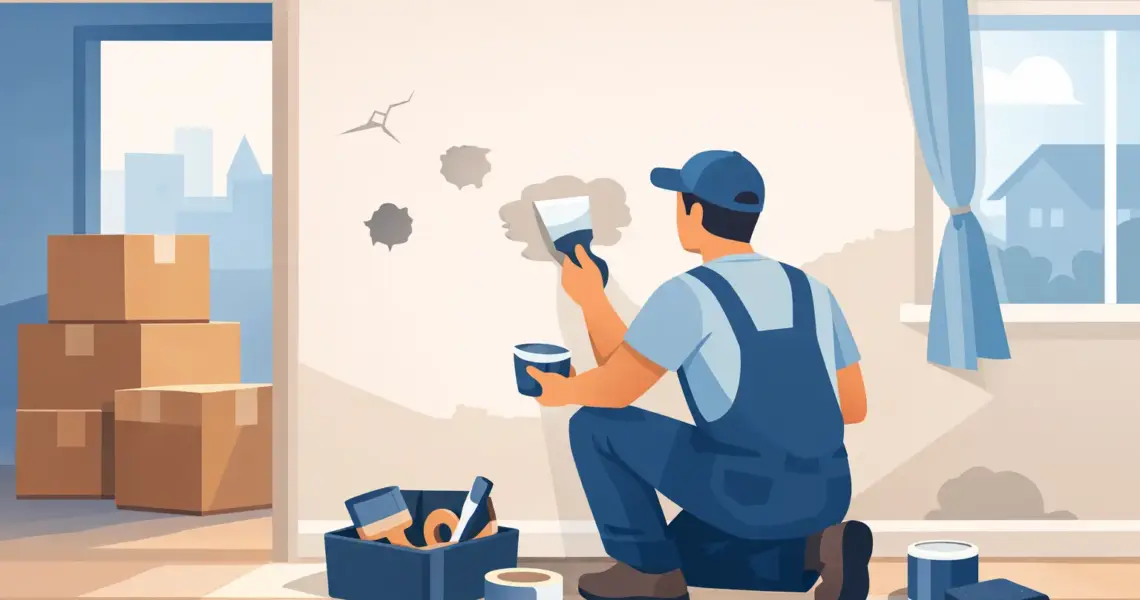
Move out wall repair often includes filling nail and screw holes, repairing dents and hairline cracks, smoothing chipped corners, correcting minor plaster damage, sanding rough areas, and repainting to blend with the surrounding surface. In some homes or commercial spaces, it also means treating moisture marks, fixing peeling paint, or dealing with damage caused by mounted shelves, TVs, curtain brackets, or adhesive hooks.
The tricky part is that not every mark should be handled the same way. A pinhole from a photo frame is simple. A widened anchor hole from a heavy wall-mounted item needs a more stable fill. A crack near a door frame might be harmless settling, or it might point to repeated impact or movement. Good repair work starts with identifying the cause, not just hiding the surface damage.
Why small wall damage can cost more than people expect
A lot of tenants assume they only need to fill visible holes. That sounds reasonable until the paint dries a different shade, the patched area flashes under overhead lighting, or a rough sanding mark becomes visible from across the room. At move-out, landlords and inspection teams tend to notice consistency as much as damage.
This is where people lose money and time. A rushed patch job can look worse than the original defect. If multiple walls have scattered repairs, touching up one spot at a time may create a blotchy finish. In many cases, the best result is not a tiny fix but repainting a full wall section so the color and sheen appear even.
There is also the question of normal wear and tear versus tenant-caused damage. That depends on the lease, the age of the paint, and the scale of the issue. Light scuffing may be expected after years of occupancy. Deep gouges, unapproved mounting damage, or careless patching usually are not. If you are unsure, it is safer to repair proactively than argue about preventable defects later.
DIY or professional move out wall repair?
It depends on the condition of the walls, the time you have left, and how exact the final appearance needs to be.
If you are dealing with two or three tiny picture-hook holes on a flat white wall, a careful DIY fix may be enough. But if the wall has texture, off-white paint, prior patching, corner damage, or several problem areas across the room, professional repair usually gives a better and faster result.
The biggest difference is finish quality. Professional technicians know how to match filler depth, sanding pressure, primer use, and paint coverage so the repaired area blends in. That matters most in entryways, living rooms, and bedrooms where inspection standards tend to be higher.
Time is another factor. Move-out schedules rarely leave room for mistakes. If the patch shrinks, the paint mismatches, or the wall needs a second round of sanding, you may run out of time before handover. A professional service reduces that risk and can often handle wall repair alongside painting and other maintenance items in one visit.
The repair process that gets better results
Good wall repair is less about speed and more about sequence. Skipping one step often creates the exact problem people notice later.
Assess the wall before starting
A technician should check the type of wall surface, paint condition, size of the damage, and whether there are hidden issues such as moisture or loose plaster. This determines whether the job needs simple filler, joint compound, mesh support, primer, or a broader repaint.
Clean and prepare the area
Dust, grease, and loose paint affect adhesion. The damaged section should be cleaned and any flaking material removed. For larger holes or dents, the edges may need to be cut back slightly so the filler bonds properly.
Fill, level, and sand carefully
This stage is where workmanship shows. Too much filler creates a hump. Too little causes shrinkage. Sanding should leave the area smooth without scarring the surrounding paint. On textured walls, matching the existing finish is just as important as filling the hole itself.
Prime when needed
Many rushed repairs skip primer, and that is a mistake. Primer helps the repaired area absorb paint evenly. Without it, patches can appear duller or shinier than the surrounding wall.
Paint for a consistent finish
Sometimes a spot touch-up works. Sometimes it does not. If the original paint has aged or the exact color is unavailable, painting the full wall or a larger section may be the only way to avoid visible contrast. This is one of those areas where the right choice depends on lighting, wall size, and the paint sheen.
What landlords and property managers usually notice first
Inspection standards vary, but a few issues almost always draw attention. Poorly patched anchor holes are one. Another is paint touch-up that creates obvious square or circular marks. Corner chips around entrances and hallways also stand out because they suggest impact damage rather than normal use.
Landlords also tend to notice inconsistency from room to room. If one bedroom has clean, fresh walls and another has visible patching, the unit feels unfinished. For property managers turning over rental units quickly, appearance matters because wall condition affects listing photos, viewing impressions, and how fast the next tenant commits.
That is why move out wall repair should not be treated as an isolated chore. It is part of presenting the property as well-maintained and ready for the next occupant.
When wall repair is part of a bigger handover checklist
Wall issues often show up alongside other last-minute problems. Loose curtain brackets, paint damage near AC servicing points, stains around light switches, chipped skirting near furniture movement, and minor door or carpentry defects can all appear at the same time.
For busy tenants and property owners, coordinating different trades for small jobs is rarely efficient. This is where a full-service maintenance provider has an advantage. Instead of booking separate painters, handymen, and repair technicians, you can handle multiple handover items in one process. For customers who need fast scheduling and dependable workmanship, that saves more than time. It reduces stress when the deadline is fixed.
Dubai Home Master supports this kind of practical, all-in-one service approach, especially when wall repair is only one part of getting a home or rental unit ready for inspection or handover.
How to know if you should book help now
If you can see the damage from the doorway, it is worth fixing. If the wall has more than a few holes, if paint matching feels uncertain, or if your move-out date is close, waiting rarely improves the outcome. The same applies if you are a landlord trying to shorten vacancy time. Quick, professional repairs help you present the property well without dragging turnover into another week.
You should also act quickly if the damage involves moisture stains, bubbling paint, recurring cracks, or broken plaster edges. Those are not just cosmetic issues, and they may need repair beyond filler and paint.
The best move-out repairs are the ones no one notices. Not because corners were cut, but because the wall looks whole again, the finish is even, and the property feels cared for. When you are leaving a space or preparing it for the next person, that kind of result makes the final handover easier for everyone.