
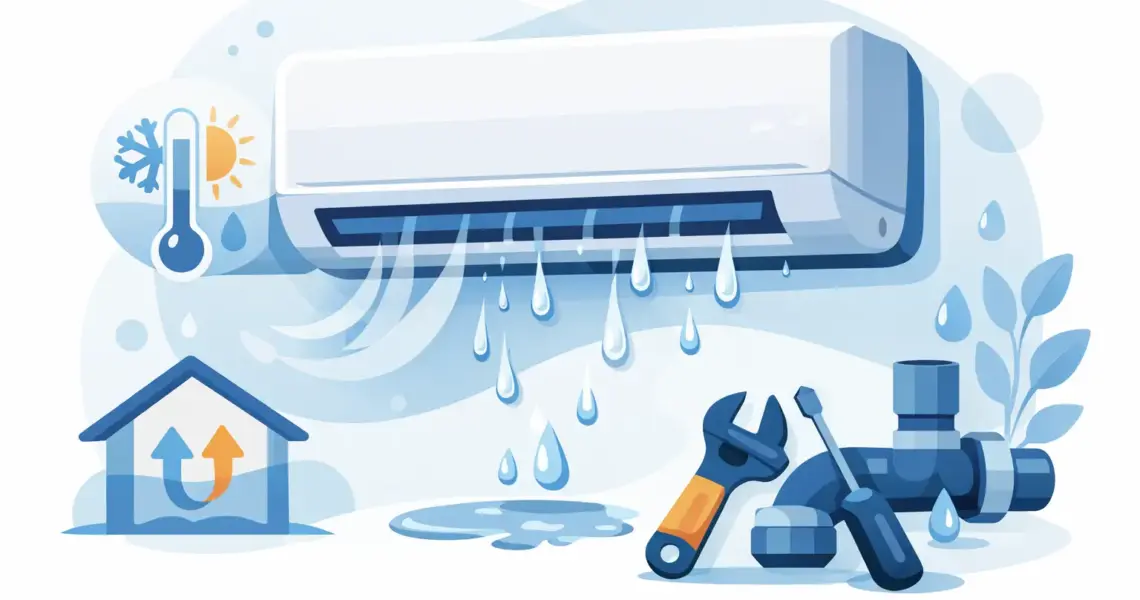
Why Is AC Leaking? Common Causes Explained
July 1, 2026Water under the indoor unit usually starts as a small annoyance, then turns into stained walls, ceiling marks, musty smells, or a soaked floor. If you are asking why is AC leaking, the short answer is that your system is not draining condensation the way it should. The bigger question is what caused that failure, and whether it is a quick maintenance issue or a sign of a more serious AC problem.
In Dubai, where air conditioning runs hard for long hours, even a minor drainage issue can escalate quickly. A leak does not always mean the unit itself is broken beyond repair, but it does mean the system needs attention before moisture damages nearby surfaces or affects performance.
Why is AC leaking from the indoor unit?
Most indoor AC leaks happen because water forms during cooling and then cannot leave the system properly. Your air conditioner pulls humidity from the air as it cools the room. That moisture collects on the evaporator coil, drips into a drain pan, and exits through a drain line. When any part of that process gets blocked, cracked, frozen, tilted, or overloaded, water ends up where it should not.
That is why the leak may seem sudden even if the actual issue built up over time. A dirty filter, poor installation angle, clogged drain line, or low refrigerant level can quietly stress the system until water finally spills over.
The most common reasons an AC starts leaking
A clogged condensate drain line
This is one of the most common causes. Dust, algae, sludge, and debris can collect inside the drain line and stop water from flowing out. Once that happens, the drain pan fills up and overflows.
You may notice dripping from the front of the unit, water marks below it, or a damp smell nearby. In many homes and offices, this issue begins gradually. The AC still cools, so people ignore the early signs until the leak becomes visible.
A dirty air filter
A neglected air filter does more than reduce airflow. When airflow drops, the evaporator coil can get too cold and freeze. Later, when the ice melts, it creates more water than the drain system can handle at once. That often leads to leaking.
This is a good example of why simple maintenance matters. A cheap filter problem can trigger a much more frustrating mess if left alone.
A damaged or rusted drain pan
If the drain pan is cracked, corroded, or out of position, water may drip before it ever reaches the drain line. Older AC systems are especially vulnerable to this. Over time, moisture exposure can weaken the pan, and once even a small crack appears, leaking starts.
Sometimes the pan can be replaced without major work. In other cases, the age and condition of the system make broader repair more sensible.
Low refrigerant levels
Low refrigerant changes the pressure inside the system, which can cause the evaporator coil to become too cold and freeze. When the ice melts, excess water can overflow the pan.
If your AC is leaking and also struggling to cool, making hissing sounds, or taking longer than usual to reach the set temperature, refrigerant may be part of the issue. This is not a DIY situation. Refrigerant problems need proper diagnosis, leak testing, and safe handling by a trained technician.
Improper AC installation
An indoor unit must be installed at the correct angle so condensation drains in the right direction. If the unit is slightly off level, water may collect and spill indoors instead of moving toward the drain.
This happens more often than many people expect, especially after rushed installations or previous repair work. The system may have worked acceptably for a while, then started leaking once dust buildup or heavier usage made drainage less forgiving.
Frozen evaporator coil
A frozen coil can come from dirty filters, blocked vents, low refrigerant, or blower issues. The freezing itself is not the final problem – the leak usually appears when that ice begins to melt.
If you see ice on the unit, switch the system off and avoid forcing it to keep running. Continued operation can strain other components and make the repair more expensive.
Broken condensate pump
In some systems, especially where gravity drainage is not practical, a condensate pump moves water out of the unit. If that pump fails, water backs up and leaks.
This is less common than a clogged drain line, but it is a real possibility in certain property layouts. The fix depends on whether the pump is blocked, electrically faulty, or worn out.
What you can check before calling for repair
If you notice water leaking, start with the simple and safe checks. Turn off the AC first. This protects the system and limits further water damage.
Check the air filter. If it looks dusty or clogged, replace or clean it according to the system type. Look around the indoor unit for visible ice, unusual dirt buildup, or signs that the water is coming from a specific corner rather than evenly from the unit.
If you can safely see the drain outlet, check whether water is flowing out or whether it appears blocked. Do not start opening sealed AC components or handling refrigerant-related parts. A basic visual inspection is useful. Improvised repair is not.
You should also pay attention to patterns. Does the AC leak only after running for several hours? Does cooling feel weak? Did the issue begin after recent maintenance, installation, or wall work nearby? Those details help a technician identify the cause faster.
When leaking AC becomes urgent
Some leaks can wait a few hours for a scheduled visit. Others should be treated as urgent.
You should arrange prompt service if water is dripping near electrical points, soaking drywall or woodwork, causing ceiling bubbling, or creating a slipping hazard. The same applies if the AC has stopped cooling properly, if you hear unusual sounds, or if the leak returns soon after cleaning the filter.
For landlords, property managers, and business owners, delay often costs more than repair. Water can damage paint, flooring, joinery, ceiling boards, and nearby fixtures. A small AC issue can quickly become a wider maintenance job.
Why it keeps happening in hot climates
Heavy AC use increases wear on filters, coils, and drain systems. In hot climates, units run longer and remove more humidity, which means more condensation moving through the drainage path every day. If maintenance is delayed, buildup forms faster and small installation flaws become more noticeable.
That is why recurring leaks are often less about one dramatic failure and more about system neglect. A unit that has not been cleaned, checked, and serviced on schedule is much more likely to leak when temperatures rise and usage peaks.
How professionals fix the problem
A proper repair starts with diagnosis, not guesswork. A technician will usually inspect the filter, coil, drain pan, drain line, unit level, insulation condition, and refrigerant performance. The right fix may be as simple as clearing a blockage, or it may involve replacing a damaged component or correcting installation errors.
The trade-off is straightforward. Quick patchwork may stop visible dripping for a day or two, but it does not solve hidden freezing, pressure imbalance, or drainage defects. Reliable repair focuses on the root cause so the leak does not return.
For busy homeowners and property managers, that matters. It saves repeat callouts, protects interiors, and helps the AC cool efficiently instead of struggling through another temporary fix.
Preventing future AC leaks
Regular servicing is the best protection. Filters should be checked consistently, drainage should be kept clear, and the system should be inspected before peak cooling season. If your unit has leaked once, it is wise to have it evaluated fully rather than assuming the problem is gone because the dripping stopped.
A well-maintained AC is not just about comfort. It helps prevent moisture damage, improves airflow, supports energy efficiency, and reduces the chance of a breakdown during the hottest days.
If you need a dependable team to inspect a leaking system, Dubai Home Master handles AC issues with the kind of fast, practical support property owners want – clear diagnosis, skilled technicians, and repairs that focus on restoring comfort without unnecessary delay.
When your AC starts leaking, treat it as an early warning, not a minor inconvenience. Water is telling you the system needs help, and the faster you respond, the easier it usually is to put things right.