
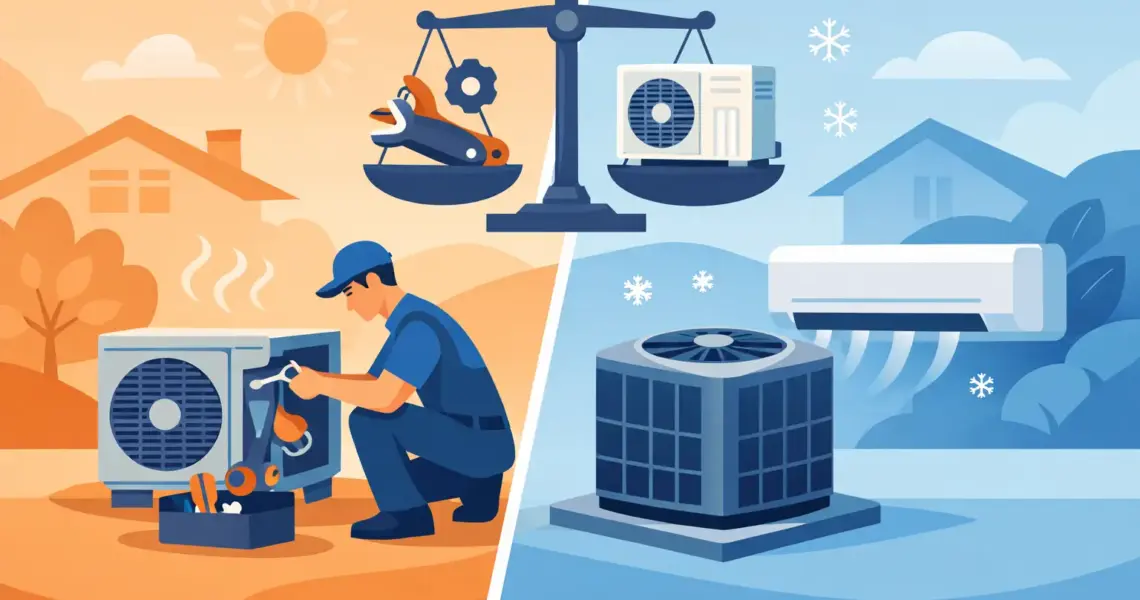
AC Repair or Replacement: What Makes Sense?
July 9, 2026The AC fails on the hottest week of the year, starts blowing warm air, or drives your electric bill up without warning. That is usually when homeowners, tenants, and property managers face the same question: should you choose ac repair or replacement? The right answer depends on the age of the unit, the type of fault, repair history, energy use, and how long you plan to keep the property.
This decision is not just about fixing what is broken today. It is about avoiding repeat breakdowns, protecting indoor comfort, and making sure you are not spending good money on a system that is already near the end of its service life. In a place where cooling is not optional, delays can quickly turn into bigger costs.
How to decide on AC repair or replacement
A newer system with one isolated problem is often worth repairing. If the compressor is healthy, airflow is good, and the unit has been reliable until now, a targeted repair can restore performance without much disruption. Problems like a faulty capacitor, blocked drain line, thermostat issue, or worn contactor are usually repair-first situations.
Replacement becomes more attractive when the unit is older, repairs are stacking up, or cooling performance stays inconsistent even after service. If rooms are unevenly cooled, humidity feels high, noise is getting worse, and breakdowns keep returning, the system may be telling you it is time to move on.
A practical way to think about it is this: repair makes sense when it solves the problem clearly and economically. Replacement makes sense when the repair only buys a little more time.
The biggest signs a repair is enough
Not every AC problem means the whole system is failing. Many issues come from neglected maintenance or a single worn part. If the system turns on normally, cools well after service, and has no major history of breakdowns, repair is often the smarter move.
You can usually lean toward repair when the unit is under 8 to 10 years old, the repair cost is manageable, and the issue has a clear cause. Refrigerant leaks can be more complicated. A small, repairable leak in a relatively modern system may still be worth fixing. But repeated leaks in an aging unit are a different story.
Short cycling can also go either way. Sometimes it is caused by a dirty filter, thermostat placement, or an electrical issue. Other times it points to deeper system strain. That is why a proper inspection matters more than guessing from symptoms alone.
When AC replacement is the better investment
Age matters, but age alone should not make the decision. A well-maintained system can outperform a neglected newer one. Still, once an AC system moves past the 10 to 15 year range, replacement deserves serious consideration, especially if major components begin to fail.
If the compressor fails in an older unit, replacement is often more sensible than paying for a major repair on equipment that may soon need more work. The same applies when parts are becoming harder to source or when the system uses older refrigerant types that are more expensive to handle.
Energy efficiency is another major factor. An aging unit may still cool, but it can do so at a much higher operating cost. If your power bills have been climbing and your AC runs longer than it used to, a new system may lower monthly expenses while improving comfort. For landlords and property managers, that can also mean fewer complaints and less downtime between tenants.
Cost is important, but so is the pattern
Many people compare one repair estimate against one replacement estimate and stop there. That is understandable, but it misses the bigger picture. The better comparison is total expected cost over the next few years.
A modest repair on a reliable unit can be excellent value. But a moderate repair on a system that has already needed repeated service may just be the start of another cycle of calls, temporary fixes, and lost comfort. If you have paid for several repairs in the last 12 to 24 months, replacement may actually protect your budget.
There is also the cost of inconvenience. For a family home, a failed AC affects sleep, comfort, and daily routine. For a small business, it can affect staff, customers, and operations. Spending less today is not always the cheaper decision if the same unit fails again during peak heat.
Performance problems that point beyond a simple fix
Some symptoms look small but suggest larger system decline. Weak airflow, hot and cold spots, musty odors, excess humidity, and constant running can all indicate a system that is no longer performing as it should. Sometimes the issue is duct-related or tied to poor maintenance. Sometimes the equipment itself is undersized, aging, or wearing out internally.
This is where honest diagnosis matters. Repairing a single part will not solve comfort problems caused by wrong system sizing, damaged ductwork, or an old unit losing efficiency across several components. A good technician should explain whether the problem is isolated or systemic.
If your AC has become noisy, struggles in the afternoon, or never seems to fully shut off, replacement may offer more than just reliability. It can improve temperature consistency, reduce noise, and make the property feel comfortable again instead of barely manageable.
Repair or replace based on how long you will keep the property
Your plans for the property should shape the decision. If you are a tenant, the choice may be limited to what the property owner approves, but understanding the issue still helps you ask the right questions. If you are a homeowner planning to stay for years, long-term efficiency and reliability matter more. If you are preparing to sell, the equation can shift.
For a long-term residence, replacing an aging and unreliable unit can reduce surprise costs and improve daily comfort. For a rental property, replacement can make sense when repair history is affecting tenant satisfaction or causing repeated emergency visits. For a property you may sell soon, a strategic repair might be enough if the system is otherwise stable. It depends on condition, not just timing.
Why professional diagnosis makes all the difference
The repair-versus-replace decision should never be based on a loud noise and a quick opinion. A proper evaluation looks at electrical components, refrigerant condition, airflow, coil cleanliness, drainage, thermostat function, and overall system health. It should also consider the age of the equipment and whether previous repairs actually addressed root causes.
That is where working with a dependable maintenance partner matters. A qualified team will not push replacement when a sound repair can restore performance. Just as important, they should not recommend another patch when the system is clearly costing you more in the long run. Dubai Home Master approaches this the practical way: diagnose accurately, explain the options clearly, and help customers choose the most cost-effective path for their home or property.
A smart rule of thumb for ac repair or replacement
If the unit is relatively young, the issue is isolated, and the repair cost is reasonable, repair is usually the right call. If the system is older, inefficient, and stuck in a cycle of breakdowns, replacement is often the safer investment. The gray area sits in the middle, where age, cost, and performance all need to be weighed together.
There is no benefit in rushing either decision. A rushed repair can waste money. A rushed replacement can lead to overspending on a problem that was fixable. What works best is a clear inspection, honest advice, and a decision based on how the system has been performing over time, not just what happened today.
When your AC starts struggling, the goal is not simply to get it running again for a day or two. The goal is to restore comfort in a way that makes financial and practical sense. The best choice is the one that gives you confidence the next time the temperature rises.