
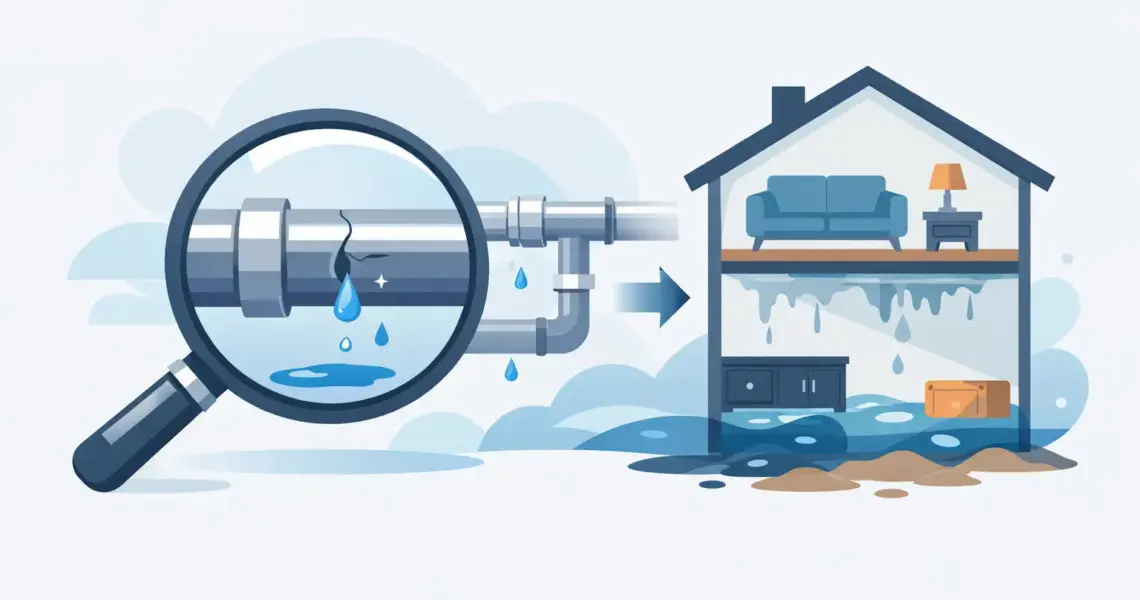
How to Detect Pipe Leaks Before Damage Spreads
July 23, 2026A pipe leak rarely begins with a flooded room. More often, it starts with a water bill that seems unusually high, a faint musty smell under the sink, or a small stain that slowly grows across the ceiling. Knowing how to detect pipe leaks at this early stage can protect your property, reduce water waste, and prevent a manageable repair from becoming major restoration work.
For homeowners, tenants, landlords, and property managers, the goal is not to diagnose every plumbing issue alone. It is to recognize the warning signs quickly, take sensible first steps, and arrange professional help before water damages finishes, furniture, electrical systems, or neighboring units.
How to Detect Pipe Leaks Using Simple Checks
Start with what you can see, hear, and measure. Many leaks develop in concealed pipework behind walls, above ceilings, beneath floors, or inside cabinets, but they often leave clear evidence around the affected area.
Check your water meter when no water is running
The water meter test is one of the most useful ways to identify a hidden leak. First, make sure all water use is stopped. Turn off faucets, avoid flushing toilets, pause washing machines and dishwashers, and ensure irrigation is not operating. Then note the meter reading or take a clear photo of it.
Wait at least 30 minutes, preferably one to two hours, without using water. If the reading changes, water may be moving through the system when it should not be. That can point to a leak in the supply line, a leaking toilet, or another fixture that is not immediately obvious.
This test does not tell you exactly where the problem is. It does, however, give you a strong reason to investigate promptly. If the meter is moving quickly, or if you see water pooling indoors, turn off the main water supply and contact a plumbing professional.
Compare water bills and normal usage
An unexpected increase in water consumption can be an early leak indicator, especially when household habits have not changed. Review recent bills against prior months and consider whether guests, irrigation, cleaning, or seasonal changes explain the difference.
A minor increase may be caused by a dripping faucet or a toilet that continues running after flushing. A significant or continuing rise can suggest a hidden pipe leak. For landlords and property managers, monitoring water use across vacant properties is particularly valuable because leaks can continue unnoticed for days.
Look for stains, bubbling paint, and warped finishes
Water that escapes from a hidden pipe travels until it finds an opening or absorbent material. Check ceilings, walls, baseboards, cabinets, and flooring for discolored patches, peeling paint, bubbling plaster, swollen wood, loose tiles, or lifting laminate.
A ceiling stain below a bathroom, kitchen, or AC drain line deserves attention even if it looks dry. The source may be intermittent, such as a leak that occurs only when a shower is used or when a washing machine drains. Do not simply repaint over the area. The moisture source must be found and repaired first.
Use your senses around plumbing fixtures
A persistent musty odor often means moisture has been trapped in a cabinet, wall cavity, or floor finish. Open sink cabinets and inspect around pipe joints, shutoff valves, flexible hoses, and the base of the cabinet. A damp smell, corrosion, water marks, or soft cabinet panels can reveal a slow leak.
Listen for hissing, dripping, or the sound of water running when fixtures are off. These noises are easier to notice late at night, when the property is quiet. Also pay attention to warm spots on a floor, which can sometimes indicate a leak in a hot-water line beneath the surface.
Inspect Common Leak Locations
Not every wet area is caused by a broken pipe. Condensation, failed waterproofing, appliance drainage, roof leaks, and AC issues can produce similar symptoms. A practical inspection focuses on areas where plumbing connections and water pressure are most likely to create problems.
Under kitchen and bathroom sinks, look closely at drain traps, supply hoses, valve connections, and joints. Run water for a few minutes, then dry the area and check for fresh moisture. A tissue pressed around a connection can reveal a very small leak that is difficult to see.
At toilets, inspect the floor around the base, the water supply connection, and the tank. A toilet that refills by itself may have a faulty internal valve, while water around the base may indicate a failed seal. Both waste water and can damage flooring if ignored.
Near washing machines, dishwashers, water heaters, and refrigerators with water dispensers, check hoses and connections regularly. These appliances can leak slowly behind cabinets or suddenly when an aging hose fails. Replacing worn hoses before they burst is usually far less costly than repairing water damage afterward.
In bathrooms, pay attention to moisture appearing on walls shared with a shower or bathtub. If the leak occurs only during bathing, the issue may involve a supply pipe, drain connection, grout failure, or waterproofing. Proper diagnosis matters because each cause requires a different repair approach.
Separate a Pipe Leak From Other Moisture Problems
A visible stain does not automatically mean the plumbing is leaking. If water marks worsen after rain, the source may be a roof, window, or exterior wall issue. If condensation appears around AC ducts or vents, cooling-system drainage or insulation may be responsible instead.
Timing is a helpful clue. Moisture that appears after someone uses a bathroom points toward plumbing or drainage. Moisture that develops during AC operation may be related to condensate drainage. Water that appears only after rainfall requires an exterior inspection.
This distinction is why guesswork can be expensive. Opening walls or replacing finishes without locating the source first may create unnecessary disruption while leaving the actual problem unresolved. A qualified technician can use pressure testing, moisture detection equipment, thermal inspection, and targeted access methods to locate the issue with less damage to the property.
What to Do When You Find a Suspected Leak
If you find a small drip beneath a sink or appliance, place a container under the leak if it is safe to do so, avoid using the affected fixture, and schedule a repair. Do not overtighten fittings aggressively. A damaged valve, cracked connector, or corroded pipe can worsen under excessive force.
For active leaks, water spreading across a floor, a bulging ceiling, or moisture near electrical outlets, act immediately. Shut off the local isolation valve if you know which fixture is affected. If you cannot stop the flow, shut off the main water supply. Keep people away from wet electrical areas and do not touch switches, outlets, or appliances near standing water.
Take photos of visible damage for your records, especially in rental, commercial, or managed properties. Then arrange professional inspection. Fast action can limit damage to drywall, flooring, cabinetry, and finishes, while also reducing the risk of mold growth.
When Professional Leak Detection Is Worth It
Some leaks are easy to identify, such as a worn faucet washer or a loose visible connection. Hidden leaks are different. If the meter test indicates water loss but you cannot find the source, professional leak detection is the sensible next step.
It is also worth calling a plumber when stains return after repairs, water pressure suddenly drops, floors feel damp or warm, a ceiling is sagging, or you suspect a leak beneath tile or behind finished walls. Waiting may seem economical, but concealed water damage often becomes more expensive with time.
Dubai Home Master can inspect plumbing concerns, identify the likely source, and carry out the repair with skilled technicians and practical advice for protecting the rest of the property. For urgent water issues, a responsive maintenance partner can make the difference between a contained repair and a costly disruption.
A quick meter check, a closer look under cabinets, and attention to unusual stains can save you from serious damage. When something does not look, smell, or sound right, treat it as an early warning and get the source checked before water has time to spread.