
Leak Detection Services for Hidden Water Leaks
July 21, 2026A damp patch that keeps returning after cleaning, an unexplained jump in your water bill, or the sound of water moving when every tap is off can point to a concealed problem. Professional leak detection services identify the source without turning a small concern into unnecessary wall or floor damage. For Dubai homes, rentals, offices, and retail spaces, early action can protect finishes, reduce water waste, and prevent a more disruptive plumbing repair later.
When You May Need Leak Detection Services
Not every leak announces itself with a dripping faucet. Many begin behind tiled bathroom walls, beneath flooring, inside ceilings, or along water lines concealed in service areas. The visible mark is often some distance from the actual leak, which is why guessing can lead to wasted time and avoidable repairs.
Watch for persistent moisture on walls or ceilings, peeling paint, loose tiles, musty odors, mold growth, low water pressure, or water pooling near fixtures. A water meter that continues to move while all taps and appliances are off is another strong warning sign. In villas, look for unusually green or soft areas in the garden, which may suggest a buried pipe leak.
Landlords and property managers should take tenant reports seriously, even when the issue seems minor. A slow leak can affect neighboring units, damage common areas, and create disputes over utility costs. Small business operators face a similar risk: moisture behind a wall can damage inventory, electrical systems, or customer-facing finishes before anyone sees the full extent of the problem.
How Professional Leak Detection Works
The goal is simple: locate the leak as accurately as possible before repair work begins. A skilled technician starts with the practical basics, including a visual inspection, plumbing fixture checks, meter readings, and an assessment of where moisture is appearing. From there, the right detection method depends on the property layout, pipe material, and suspected source.
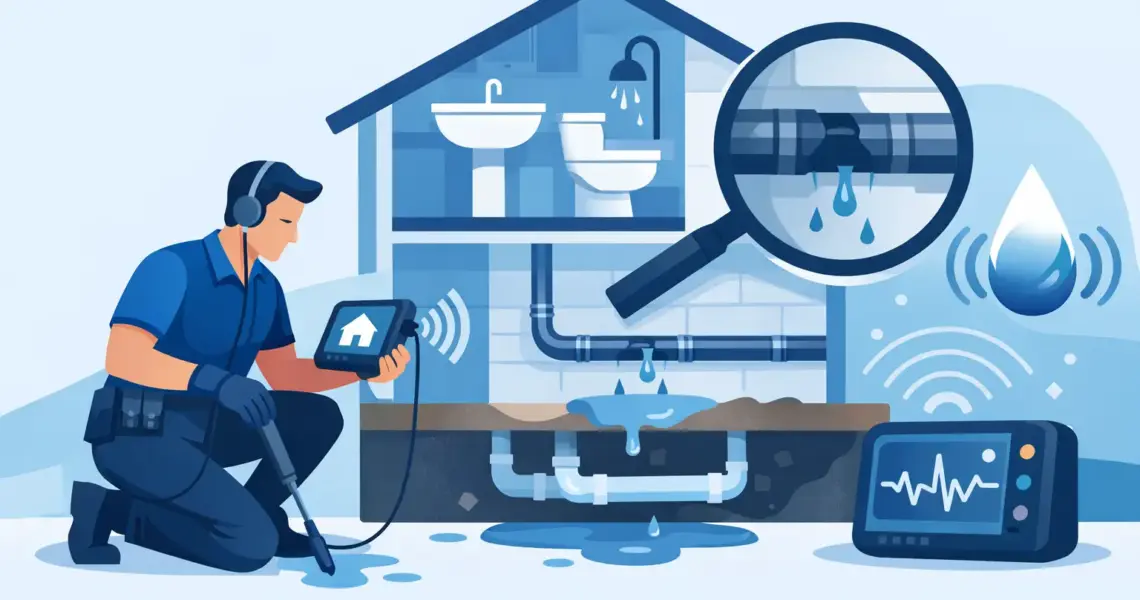
Non-invasive tools may include thermal imaging to identify unusual temperature patterns caused by escaping water, acoustic equipment to listen for water movement in pressurized pipes, and moisture meters to measure dampness within walls or floors. Pressure testing can help confirm whether a plumbing line is losing water. In some cases, drain lines, waterproofing failures, AC condensate drains, or water tanks need separate testing because they do not behave like a pressurized supply pipe.
This approach matters because water on a ceiling does not automatically mean the pipe directly above it has failed. It could be a bathroom waterproofing issue, a damaged grout line, an AC drain blockage, a leaking appliance connection, or water traveling along a pipe or slab before becoming visible. Accurate diagnosis prevents repairs that only hide the symptom.
Detection First, Targeted Repair Next
Once the source is confirmed, the repair can be planned around the affected area rather than opening large sections of the property. That may mean replacing a damaged pipe fitting, repairing a section of line, resealing a bathroom edge, clearing a condensate drain, or addressing failed waterproofing.
There is a trade-off. In older properties or areas with extensive water damage, a small access opening may still be necessary to complete a durable repair. The difference is that it is made with evidence, not guesswork. After the plumbing work, affected surfaces may need drying, patching, painting, tile replacement, or ceiling repair. Coordinating those trades through one maintenance provider can make restoration far less stressful.
Common Types of Hidden Leaks in Dubai Properties
Dubai properties have their own operating conditions. AC systems run for much of the year, bathrooms are frequently tiled from floor to ceiling, and many buildings rely on tanks, pumps, and concealed plumbing lines. These factors make several leak sources especially common.
Bathroom and kitchen leaks often develop around flexible hoses, mixer connections, concealed cisterns, floor drains, and shower waterproofing. Even a small failure behind a vanity or inside a wall can create moisture that spreads into adjoining rooms.
AC-related moisture problems are also regularly mistaken for plumbing leaks. A blocked condensate drain, damaged drain pipe, poorly insulated line, or overflowing drain pan can stain a ceiling and encourage mold. The repair may be straightforward, but only after the true source is verified.
Roof and balcony leaks are more likely to appear after rain or exterior washing. Cracks in waterproofing membranes, failed sealant around penetrations, blocked drains, and damaged tile grout can allow water into the slab. These cases require careful assessment because adding sealant to the visible stain will not solve water entry from above.
Underground or external pipe leaks can be harder to spot. They may cause unexplained water use, wet areas near landscaping, loss of pressure, or water gathering around a pump room. Prompt detection helps avoid soil erosion, damaged paving, and excessive utility charges.
Why Quick Action Saves More Than Water
A slow leak can waste a surprising amount of water over weeks or months. But the water bill is only one part of the cost. Moisture weakens gypsum ceilings, stains paint, causes woodwork to swell, loosens tiles, and can lead to mold growth in enclosed spaces. If water reaches electrical components, the issue becomes a safety concern as well as a maintenance problem.
For tenants, reporting suspected leaks quickly helps protect personal belongings and supports a clear record with the landlord or property manager. For owners, early repair preserves the condition and rental value of the property. For commercial spaces, it reduces the chance of closing an area for emergency repairs during business hours.
Emergency service is particularly valuable when water is actively flowing, a ceiling is bulging, or moisture is close to electrical outlets or panels. If this happens, turn off the nearest water supply valve when it is safe to do so, move valuables away from the area, and avoid touching wet electrical equipment. A qualified technician can then assess the issue and isolate the damage safely.
What to Expect During a Leak Inspection
A dependable inspection should give you clarity, not just a vague recommendation to break open walls. The technician should ask when the issue began, whether it follows shower use or AC operation, whether neighboring rooms are affected, and whether your water usage has changed. Access to bathrooms, kitchens, utility areas, AC units, and the water meter may be needed.
Before repair work starts, request a clear explanation of the suspected cause, the testing completed, and the proposed repair scope. If wall, ceiling, or tile access is required, ask where the opening will be made and what restoration work will follow. Transparent pricing is especially useful when the job involves more than plumbing, such as repainting, drywall repair, tile work, or waterproofing.
Dubai Home Master provides practical support across plumbing, AC, electrical, ceiling, painting, and minor civil work, so property owners can address the leak and the visible damage through one responsive maintenance team. This is helpful when a single issue affects several parts of the property.
Preventing Future Water Damage
Prevention is not about inspecting every pipe constantly. It is about responding to early warning signs and maintaining the systems most likely to cause trouble. Schedule AC maintenance before periods of heavy use, check visible hoses under sinks and behind appliances, and have bathroom sealant and grout repaired when cracks appear. If your water bill changes without a clear reason, investigate before the next billing cycle.
In vacant properties, periodic checks are worth the effort. A leak can continue unnoticed for weeks when no one is using the space. Property managers can also reduce risk by documenting meter readings, responding quickly to moisture reports, and arranging inspection after any major plumbing work.
Water damage rarely improves on its own. When a stain, odor, or utility bill suggests a hidden leak, a timely professional inspection gives you the information needed to protect your property and restore it with confidence.