
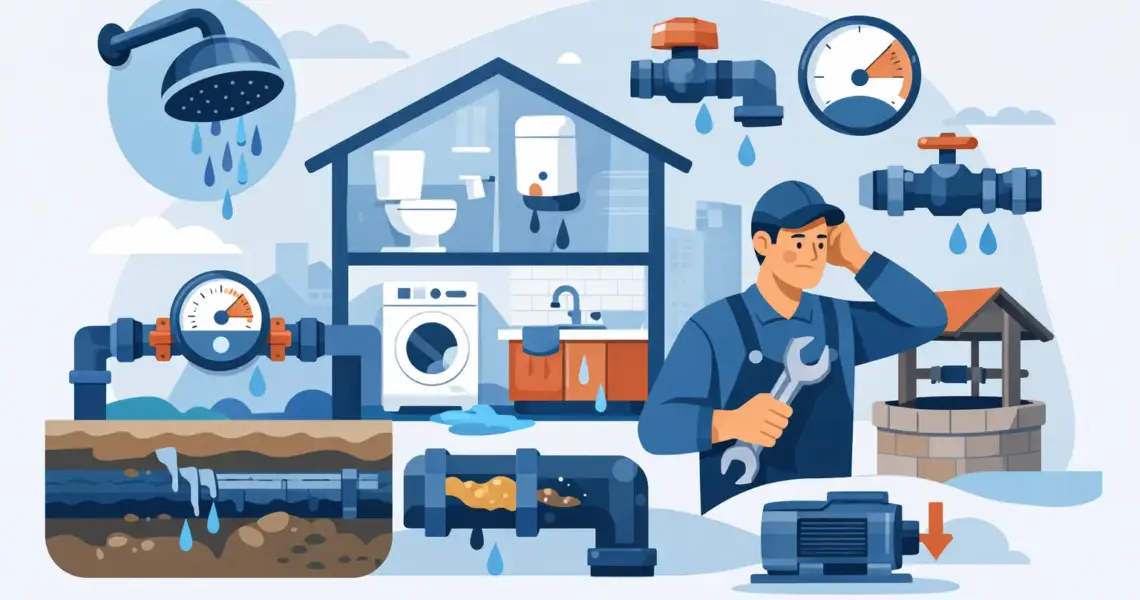
What Causes Low Water Pressure? 9 Common Issues
July 29, 2026A shower that turns from refreshing to frustrating the moment someone opens a faucet is more than a minor inconvenience. If you are asking what causes low water pressure, the answer may be as simple as a clogged showerhead or as urgent as a hidden pipe leak. Finding the source early helps protect your water supply, avoid unnecessary repair costs, and restore normal comfort to your home or business.
Low pressure can affect one fixture, one section of a property, or every faucet and appliance. That difference matters. A weak flow at one tap often points to a local blockage, while poor flow throughout the property may involve the main supply, a pressure pump, or plumbing that needs professional attention.
What Causes Low Water Pressure in a Home?
Water pressure is the force that pushes water through your plumbing. Water flow is the amount of water that actually comes out. People commonly use the terms interchangeably, but a restriction in the pipe or fixture can reduce flow even when the incoming pressure is normal.
The most likely cause depends on the age of the property, the plumbing material, the building’s water system, and whether the problem appeared suddenly or gradually. In apartments, villas, offices, and retail spaces, these are the issues technicians see most often.
1. Clogged Aerators and Showerheads
An aerator is the small screen fitted at the end of many faucets. Showerheads have similar small openings that can trap sediment, mineral deposits, and debris over time. The result is a weak or uneven stream at a single fixture.
This is one of the easier problems to solve. If pressure is low only at one faucet or shower, cleaning or replacing the aerator or showerhead may restore normal flow. However, if several fixtures have the same issue, the blockage is likely farther back in the plumbing system.
2. Partially Closed Shutoff or Main Valves
Every property has valves that control water to individual fixtures and the main water supply. A valve left partly closed after plumbing work, a move, or a maintenance visit can noticeably limit water flow.
Check whether the issue began after recent repairs. Under-sink shutoff valves should be fully open unless there is a specific reason to close them. The main valve may also be partially closed, but it is best to have a qualified plumber inspect it if you are unsure. Forcing an old or stiff valve can cause damage or trigger a leak.
3. A Leak in the Plumbing System
A hidden leak is a serious answer to the question, “what causes low water pressure?” When water escapes through a damaged pipe, loose connection, faulty fitting, or leaking water heater line, less water reaches your faucets. The problem may be inside a wall, above a ceiling, beneath flooring, or outdoors.
Look for warning signs such as damp patches, peeling paint, moldy odors, unexplained water bills, a continuously running water meter, or sounds of water when all fixtures are off. Even a small leak can become a larger property repair if it is ignored. Prompt leak detection protects finishes, furnishings, and the building structure.
4. Sediment or Scale Inside Pipes
Over time, sediment and mineral scale can collect inside pipes, especially in older plumbing systems or areas with hard water. Corrosion may also narrow the inside diameter of metal pipes. Water still moves through the line, but the reduced opening restricts the volume that can pass through.
This problem usually develops gradually. You may notice that water pressure has become weaker over months rather than overnight, with hot water affected more than cold water in some cases. Cleaning a fixture will not correct a severely restricted pipe. A plumber may need to inspect the line, flush parts of the system, or recommend replacing damaged pipe sections.
5. A Faulty Pressure Pump or Pressure Tank
Many multi-story buildings and larger homes rely on booster pumps or pressure systems to deliver consistent water to upper floors and distant fixtures. If a pump loses power, has worn components, is incorrectly sized, or has a control problem, pressure can drop across the property.
A pump issue can be especially noticeable during busy periods, when multiple occupants use water at once. Some systems cycle on and off too frequently, make unusual noises, or fail to maintain pressure at certain times of day. Because pumps combine electrical and plumbing components, repair should be handled by trained technicians rather than treated as a DIY task.
6. A Failing Pressure Regulator
A pressure regulator, also called a pressure-reducing valve, controls the force of water entering a property. It helps keep pressure within a safe range for pipes, appliances, and fixtures. When the regulator fails, water pressure may become too low, fluctuate sharply, or occasionally become too high.
Fluctuating pressure deserves attention. It can be hard on washing machines, dishwashers, water heaters, flexible hoses, and faucet cartridges. A plumber can test the pressure, assess the regulator, and install a suitable replacement if needed.
7. Problems With the Water Heater
If cold water has normal strength but hot water is weak at several fixtures, focus on the water heater and hot-water lines. A partly closed heater valve, sediment buildup in the tank, a clogged filter, or scale in the hot-water pipes can restrict flow.
Do not assume that low hot-water pressure is only an appliance issue. It may indicate a plumbing restriction that needs proper diagnosis. Water heaters involve hot surfaces, pressurized lines, and electrical or gas connections, so professional service is the safer choice.
8. Shared Supply Demand or Building-Side Issues
In apartments, commercial units, and shared buildings, low pressure may be linked to demand elsewhere in the building. Pressure can drop at peak times when many residents or tenants are showering, cleaning, or using appliances. Building tank levels, booster pump performance, or maintenance on the shared supply can also affect your unit.
If the problem appears at the same time every day or affects neighbors as well, contact building management first. If the issue is limited to your property, an internal plumbing inspection is more likely to identify the cause.
9. Municipal Supply Work or External Restrictions
A sudden pressure drop across the entire property can sometimes originate outside your plumbing. Utility maintenance, a supply interruption, a damaged external line, or temporary pressure changes may be responsible.
Before arranging extensive repairs, ask whether nearby properties are experiencing the same problem. If they are, the water provider or building management may already be addressing it. If they are not, do not delay an inspection of your own system.
How to Narrow Down the Cause Safely
Start by testing cold and hot water at more than one faucet. Notice whether low pressure affects a single fixture, one room, one floor, or the whole property. Also consider whether the pressure is consistently low or only weak during certain hours.
Next, remove and inspect an accessible faucet aerator or showerhead if you are comfortable doing so. Clean visible debris carefully and retest. Avoid dismantling concealed plumbing, pump equipment, or water heater connections without the right tools and experience.
It also helps to check for visible leaks under sinks, around toilets, near appliances, and along accessible pipework. If you see active water, damp ceilings, electrical outlets near moisture, or a sudden major loss of pressure, turn off the local water supply if safe and arrange emergency plumbing support.
When Low Water Pressure Needs a Plumber
A professional inspection is the right next step when the problem affects multiple fixtures, persists after cleaning a fixture, involves hot water only, or comes with signs of leakage. It is also advisable when pressure fluctuates, pipes make banging noises, a booster pump behaves unusually, or you manage a property where downtime affects residents or customers.
A skilled technician can test actual pressure, inspect valves, trace leaks, evaluate pumps and regulators, and identify whether the restriction is within the property or part of a shared system. That saves time compared with replacing fixtures at random and helps prevent a small plumbing concern from becoming a disruptive repair.
For homeowners, tenants, landlords, and business operators, reliable water flow is part of a well-functioning space. Dubai Home Master can assess low water pressure concerns with practical plumbing expertise and clear recommendations, so you can make the right repair decision with confidence.
A weak faucet may be a simple cleaning job, but a change across the entire property is worth taking seriously. Acting when the first signs appear gives you the best chance of restoring comfortable water flow before hidden damage or a larger system failure develops.