
Why Do Circuit Breakers Trip? Causes and Safe Fixes
July 27, 2026A breaker that trips once may be protecting your property from a simple overload. A breaker that trips repeatedly is asking for attention. If you are wondering, why do circuit breakers trip, the answer is usually that the circuit has detected more electrical current or leakage than it can safely handle. Resetting it without finding the cause can turn a small inconvenience into damaged equipment, overheated wiring, or a serious safety risk.
For homeowners, tenants, landlords, and business operators, the practical goal is not simply to restore power. It is to restore it safely and prevent the same issue from interrupting your day again.
Why Do Circuit Breakers Trip in the First Place?
A circuit breaker is a safety switch inside your electrical panel. It automatically shuts off power when it senses a condition that could overheat cables, damage appliances, or create a fire hazard. Unlike an old-fashioned fuse, it can usually be reset after the fault has been addressed.
Each breaker is designed to protect a specific circuit, such as kitchen outlets, lighting, AC equipment, a water heater, or general-use sockets. The breaker rating must match the wiring and intended load of that circuit. When the demand becomes unsafe, the breaker trips before the wires inside the walls can overheat.
A tripped breaker is therefore not the problem itself. It is evidence that the electrical system has responded to a problem somewhere on that circuit.
The Most Common Reasons a Breaker Trips
An overloaded circuit
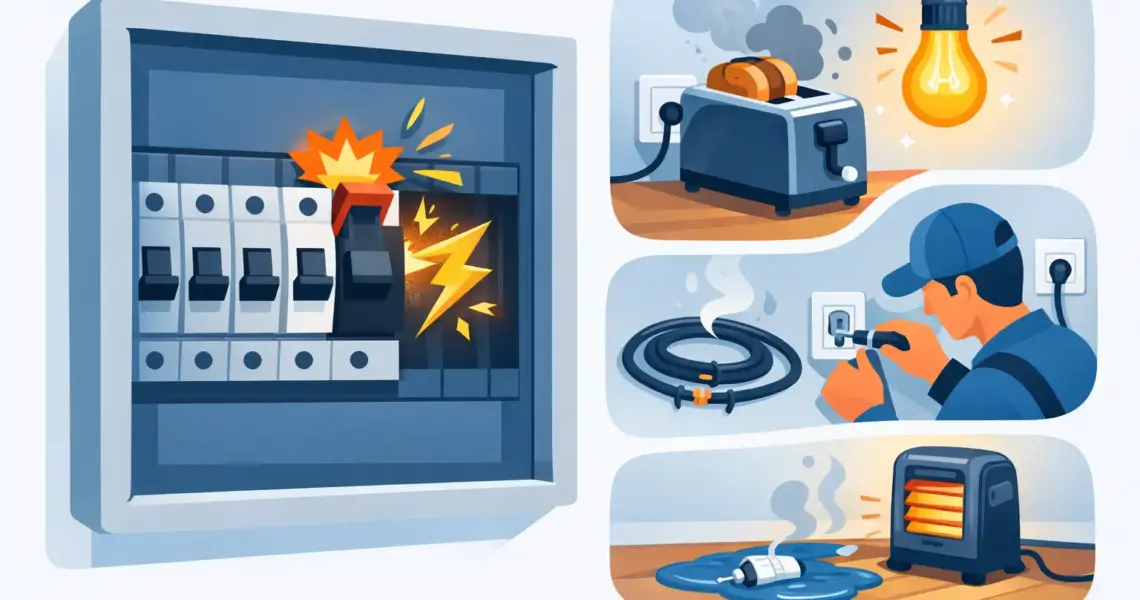
Overloading is one of the most common causes. It happens when several power-hungry appliances operate on the same circuit at once. A kettle, microwave, toaster oven, coffee machine, and portable heater can quickly exceed what a kitchen circuit is designed to carry. In a Dubai property, portable AC units, water heaters, ironing equipment, and high-load cooking appliances can create similar pressure.
The trip may happen immediately when another appliance is switched on, or after a few minutes as the circuit warms up. The practical fix may be as simple as moving an appliance to a different suitable outlet and avoiding simultaneous use. However, if your normal daily usage regularly trips a breaker, the circuit may need an upgrade or additional dedicated outlets. Extension leads and multi-plug adapters are not a long-term solution for heavy loads.
A short circuit
A short circuit occurs when a live wire comes into contact with a neutral wire or another unintended conductive path. This creates a sudden surge of current, and the breaker trips very quickly to stop it.
Short circuits can be caused by damaged appliance cords, loose wiring, worn outlets, pests damaging cables, faulty light fittings, or internal appliance failure. You may notice a sharp burning smell, a pop, discoloration around an outlet, or a breaker that trips the moment you reset it. These are signs to stop using the circuit and arrange professional electrical inspection rather than continuing to reset the breaker.
Earth leakage or a ground fault
Earth leakage happens when electricity escapes from its intended path and flows toward ground through damaged insulation, moisture, a metal appliance casing, or faulty wiring. Residual current devices, often called RCDs, are designed to detect this type of leakage and disconnect the supply quickly.
Bathrooms, kitchens, laundry areas, balconies, outdoor outlets, and locations near plumbing are more exposed to moisture-related faults. A water leak behind a wall, condensation around AC equipment, or a wet outdoor fitting can all contribute. Because electrical leakage can present a shock risk, this is not a fault to ignore, even if the breaker can be reset.
A faulty appliance or device
Sometimes the property wiring is sound and one appliance is the true cause. Older refrigerators, washing machines, dishwashers, water heaters, chargers, and portable heaters are common candidates because their internal components work hard and may degrade over time.
If the breaker stays on after you unplug everything connected to that circuit, reconnect items one at a time. If it trips when a particular appliance is plugged in or switched on, stop using that item until it has been repaired or replaced. Do not keep testing a suspected faulty appliance, particularly if its cord is hot, split, loose, or discolored.
Loose, damaged, or aging wiring
Electrical connections can loosen over time, especially in properties with older installations, previous alterations, or frequent heavy electrical use. A loose connection creates resistance and heat. It may cause intermittent tripping, flickering lights, buzzing from an outlet or panel, or a warm faceplate.
This issue is not always obvious because the damaged connection may be hidden inside a wall, ceiling, outlet box, or electrical panel. A qualified electrician can test the circuit, identify abnormal readings, inspect connections, and make repairs that meet local electrical requirements.
A weak or defective breaker
Breakers are durable, but they do not last forever. Repeated overloads, electrical faults, heat exposure, poor panel conditions, or age can affect their performance. A defective breaker may trip below its rated load, fail to reset reliably, or feel unusually loose.
Still, it is essential not to assume the breaker is at fault without testing. Replacing a breaker before finding an overloaded circuit or wiring problem can leave the underlying hazard in place. The correct replacement must also be compatible with the electrical panel and properly rated for the protected circuit.
What You Can Safely Check Before Calling an Electrician
Start with the panel only if the area is dry, the panel cover is intact, and there are no signs of burning, water, smoke, or exposed wiring. Identify the tripped breaker, which may sit between the on and off positions. Move it firmly all the way to off, then back to on.
Before resetting, turn off or unplug the devices connected to the affected circuit. If the breaker remains on with everything disconnected, reconnect appliances one at a time. This can help identify whether a specific device is causing the trip.
Do not remove the electrical panel cover, touch internal components, increase the breaker size, or bypass the breaker. A larger breaker does not solve an overload. It can allow wiring to overheat before the protective device responds.
You should also avoid resetting a breaker if there is visible damage, a burning odor, crackling, water near electrical equipment, or a tingling sensation from an appliance. Turn off power from a safe location if possible and request urgent professional assistance.
When Repeated Tripping Needs Professional Attention
A single overload caused by too many temporary appliances may be straightforward. Repeated tripping is different. It often points to a fault that requires testing, not guesswork.
Arrange an electrician promptly if the same breaker trips more than once, trips with little or nothing connected, or will not stay reset. Professional help is also needed when lights dim or flicker, outlets feel warm, the panel makes unusual noises, or an AC unit, water heater, or built-in appliance appears linked to the fault.
For landlords and property managers, quick action also protects the wider property. Electrical faults can affect tenant safety, damage appliances, interrupt essential cooling, and create avoidable repair costs. A documented inspection and proper repair are far more dependable than repeated temporary resets.
How to Prevent Future Breaker Trips
Prevention begins with using each circuit for the type of load it was designed to handle. Avoid connecting several high-wattage appliances to one outlet group, and use quality surge-protected power strips only for appropriate low-to-moderate loads. Heavy equipment should have suitable dedicated circuits where required.
Schedule maintenance for appliances that run continuously or use substantial power, including AC systems, water heaters, kitchen equipment, and laundry machines. Check cords and plugs periodically, and replace damaged items before they become a fault. In wet areas, repair plumbing leaks quickly and keep electrical outlets, switches, and connections protected from moisture.
If you are renovating, adding appliances, converting a room, or increasing the electrical demand of a rental unit or small business, have the electrical capacity assessed first. Adding new outlets or circuits correctly is safer and more convenient than relying on adapters across the room.
Dubai Home Master can help diagnose recurring breaker trips, inspect circuits and outlets, repair electrical faults, and advise on practical upgrades for homes and commercial spaces. The aim is not just to get the lights back on, but to give you confidence that the circuit is operating as it should.
A breaker that trips is doing a protective job. Treat it as an early warning, use only the safe checks you can perform confidently, and let a qualified electrician investigate anything persistent or unusual before it becomes a larger disruption.