
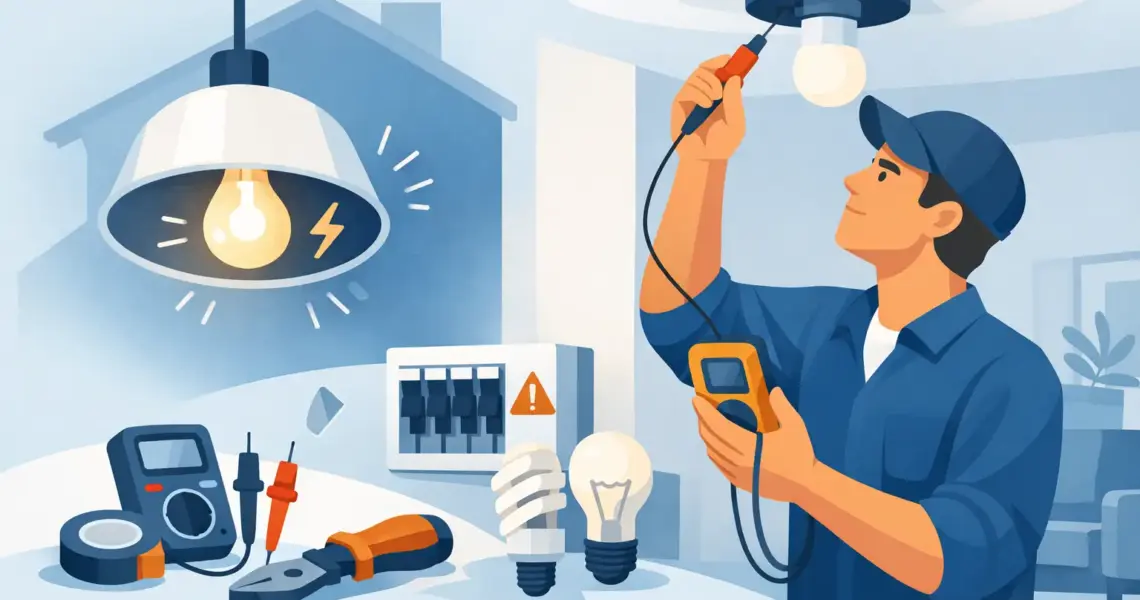
How to Fix Flickering Lights Safely at Home
July 31, 2026A light that flickers once when you switch it on may be a simple bulb issue. A light that dims when the AC starts, flashes across several rooms, or crackles at the fixture needs more attention. Knowing how to fix flickering lights starts with separating a safe, quick check from a problem that requires a qualified electrician.
For homeowners, tenants, landlords, and business operators, the goal is not just to stop the flicker. It is to find the cause before a loose connection, overloaded circuit, or failing component turns into a bigger electrical repair.
Start With the Light Bulb and Fixture
Begin with the simplest possible cause: a loose or incompatible bulb. Turn off the switch, let the bulb cool completely, and gently tighten it. A bulb that is not seated properly can lose contact with the socket and flicker intermittently.
If tightening does not solve the issue, replace the bulb with a new, good-quality one of the correct fitting and wattage. LED bulbs last a long time, but they can still fail early due to heat, poor manufacturing, or an incompatible dimmer switch. Testing another bulb in the same fixture is an easy way to narrow down the problem.
Check the fixture as well. Dust, corrosion, or a worn socket can interrupt electrical contact. Do not insert tools, bend the socket tab, or open the fixture while power is connected. If the fixture looks scorched, smells burnt, feels unusually hot, or has visible damage, stop using it and arrange a professional inspection.
Check Whether a Dimmer Is Causing the Flicker
Flickering is common when an LED bulb is connected to an older dimmer designed for incandescent bulbs. The light may pulse at low brightness, flash when switched on, or buzz while dimmed. In many cases, the fix is to use dimmable LED bulbs paired with an LED-compatible dimmer.
Not every bulb marked LED is dimmable. Installing a non-dimmable LED on a dimmer circuit can cause unstable performance and shorten the bulb’s life. If you rent the property, ask the landlord or maintenance provider before changing switches or fittings.
A dimmer replacement is usually straightforward for a licensed technician, but it is not a job to treat casually. Switch boxes contain live conductors and may have wiring arrangements that are not obvious from the outside.
How to Fix Flickering Lights in One Room
When flickering affects only one light or one room, the cause is often local to that fixture or circuit. Try a replacement bulb first. If the problem continues, notice what triggers it.
Does the light flicker when someone uses a nearby switch? Does it happen only when the ceiling fan is running? Does the fixture respond when the wall is tapped or when a door closes? These clues can point to a loose switch connection, worn fixture socket, damaged cable, or a connection inside the ceiling junction box.
Avoid repeatedly switching the light on and off to test it. A loose electrical connection can create heat and arcing, which may damage insulation or electrical components over time. Instead, turn off the affected circuit at the electrical panel if you can identify it safely, then schedule an electrician to trace and repair the fault.
When Several Lights Flicker at Once
Multiple flickering lights deserve more urgency, especially if they are on different circuits or located in different areas of the property. The issue may involve the electrical panel, a main connection, a neutral wire, or a problem with the incoming power supply.
Large appliances can also cause brief light dimming when they start. An AC compressor, refrigerator, water pump, or other motor-driven equipment draws extra power at startup. A small, occasional dip may not indicate danger, but frequent or severe flickering is not something to ignore. It may mean the circuit is overloaded, the appliance has a fault, or the electrical system needs assessment.
In Dubai homes and commercial spaces, high AC use can make electrical issues more noticeable during warmer periods. If lights flicker whenever the AC starts, a technician should check both the appliance load and the electrical connections serving it. The right solution depends on the property’s wiring layout, panel capacity, and the condition of the AC equipment.
Warning Signs That Need an Electrician Now
Some flickering-light problems are clear safety concerns. Turn off the affected circuit where possible and seek prompt professional help if you notice any of the following:
- A burning smell, buzzing sound, smoke, sparks, or black marks around a switch, outlet, or light fixture.
- A switch plate, plug, fixture, or electrical panel that feels hot to the touch.
- Circuit breakers that trip repeatedly or lights that brighten and dim dramatically.
- Flickering after water leaks, flooding, roof damage, or AC condensation near electrical fittings.
- A sudden loss of power in part of the property alongside flickering lights.
Do not cover the issue with a higher-wattage bulb, tape over a damaged switch, or keep resetting a breaker. These actions can conceal the warning without fixing the underlying fault.
What You Can Safely Check Before Booking Service
You do not need to dismantle anything to provide useful information to an electrician. Make a note of which rooms are affected, when the flickering occurs, and whether it started after installing a new fixture, bulb, appliance, or dimmer. Check whether other devices on the same circuit lose power or behave unusually.
You can also look for obvious exterior signs without touching exposed wiring: loose fixture covers, damaged cords, moisture around fittings, or discoloration on switches and outlets. If a bulb replacement resolves the problem completely, monitor it for a few days. If the flicker returns, the bulb was likely not the only cause.
For landlords and property managers, documenting the timing and location of the issue helps reduce downtime and supports a more efficient repair visit. It also helps determine whether the problem is isolated to one unit, a common area, or a building-level supply concern.
Why Professional Diagnosis Is Worth It
Electrical faults can be deceptively small at first. A loose terminal may only cause an occasional flicker, yet it can generate heat every time current passes through it. Finding the exact point of failure requires proper testing and safe access to switches, fixtures, junction boxes, circuits, and panels.
A skilled electrician can test voltage stability, inspect connections, identify overloaded circuits, replace faulty fittings or switches, and advise whether an appliance is contributing to the problem. This is particularly valuable in older properties, recently renovated spaces, and homes where multiple high-load appliances share limited circuits.
Dubai Home Master provides responsive electrical troubleshooting for homes and businesses, with trained technicians who can assess flickering lights without guesswork. A professional visit gives you a clear answer: whether the repair is as simple as a fitting replacement or whether the circuit needs corrective work.
Keep Flickering From Returning
Use quality bulbs that match the fixture and dimmer requirements. Avoid overloading extension leads and multi-plug adapters, particularly with high-power appliances. Have damaged switches, loose outlets, and persistent breaker trips addressed early rather than waiting for a complete failure.
If you are upgrading lighting during a renovation or makeover, plan the electrical work alongside the design. The right fixtures, dimmers, circuits, and load distribution create better lighting performance and help protect the property over the long term.
A steady light is a small comfort, but it also signals that your electrical system is doing its job properly. If the flicker persists after the basic checks, choosing a qualified technician is the safest way to restore that confidence.